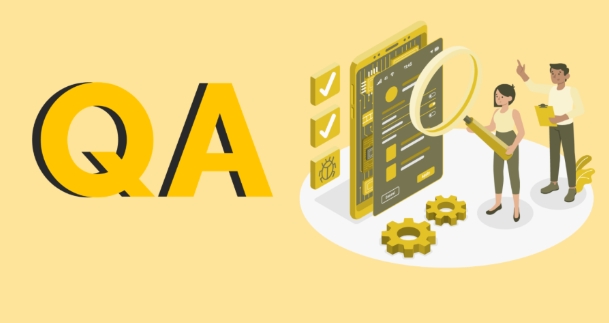
QA as a continuous process, not a final step
Traditional software development often treated QA as the last stage, a “gatekeeper” before release. Agile transforms this mindset by embedding QA into every sprint as an ongoing practice rather than a final task.
From the earliest planning sessions, QA specialists work alongside developers, product owners, and designers to define acceptance criteria, anticipate edge cases, and ensure that user stories are testable. This early involvement reduces both the cost and time of addressing defects later in the cycle.
At PowerGate Software, this philosophy is more than a framework; it is a cornerstone of our delivery culture. QA is treated as a partner, not a checkpoint. Each sprint integrates test planning, execution, and updates to automation scripts, ensuring that quality evolves alongside functionality.
Automated testing as the backbone of agile
Agile cycles move quickly, and manual testing alone cannot keep up. Automated testing provides the consistency and speed needed to validate functionality across each iteration. Unit tests, integration tests, regression tests, and UI-level automation combine to create a safety net that prevents new features from breaking existing ones.
Automation also enables teams to “fail fast, learn fast.” When a defect is detected within minutes of a code commit, developers can resolve it before it escalates into costly technical debt. This rapid feedback loop preserves both velocity and quality.
PowerGate Software’s QA teams employ industry-leading frameworks and tools to build automation suites tailored to each project. Continuous execution of these tests frees human testers to concentrate on exploratory and usability testing, where human judgment remains irreplaceable.
The role of continuous integration and delivery
Continuous integration (CI) and continuous delivery (CD) form the backbone of mature agile practices. Every code commit initiates an automated build followed by rigorous automated testing. Only builds that pass these checks advance through the pipeline, eventually reaching staging and production environments.
Embedding QA into the CI/CD pipeline turns quality into a living process. Instead of relying on large-scale, end-of-cycle testing that often delays releases, agile teams move forward with a steady cadence of small, reliable releases. The contrast could not be clearer: one approach introduces bottlenecks and risks, while the other creates flow and predictability. This mindset is also reshaping web development in Vietnam, where companies are increasingly adopting CI/CD pipelines to balance speed with reliability.
At PowerGate Software, CI/CD pipelines are designed to uncover issues early and consistently. Each feature branch undergoes automatic validation, reducing integration challenges. By the time a build reaches staging, it has already cleared several layers of testing rigor. The result is software that moves swiftly through delivery without sacrificing reliability.
QA beyond bug detection
Limiting QA to bug detection underestimates its full value. Modern QA encompasses performance, security, and usability testing, all of which are critical in today’s competitive landscape. A product that is functionally correct but fails under heavy load, exposes vulnerabilities, or confuses users can be just as damaging as one riddled with defects.
Agile QA requires this holistic perspective. Testers advocate for end users by ensuring that software is not only functional but also intuitive and secure. This aligns perfectly with the iterative nature of agile, where feedback is integrated continuously into the development cycle.
PowerGate Software embraces this broader view of QA. Our teams conduct performance benchmarking, penetration testing, and usability evaluations to refine digital experiences. These practices elevate QA from a cost center into a driver of business value.
Why robust QA is non-negotiable
Software products today must evolve rapidly and scale seamlessly, making quality assurance essential rather than optional. Agile thrives on speed, yet speed without quality results in rework, customer dissatisfaction, and reputational harm. Robust QA acts as the safeguard that allows teams to move quickly while remaining confident in their outputs.
For enterprises, the consequences of weak QA can be severe. A defect in a financial services application may trigger regulatory penalties. A performance failure in a healthcare platform could compromise patient care. A security gap in an e-commerce solution might erode customer trust overnight. QA is not simply about code; it is about safeguarding business continuity, maintaining customer loyalty, and protecting brand reputation.
PowerGate Software’s commitment to quality
Clients today demand more than fast delivery; they want software that is reliable, scalable, and enduring. With more than 200 successful projects completed worldwide, PowerGate Software has earned a reputation for integrating robust QA into every phase of the agile lifecycle.
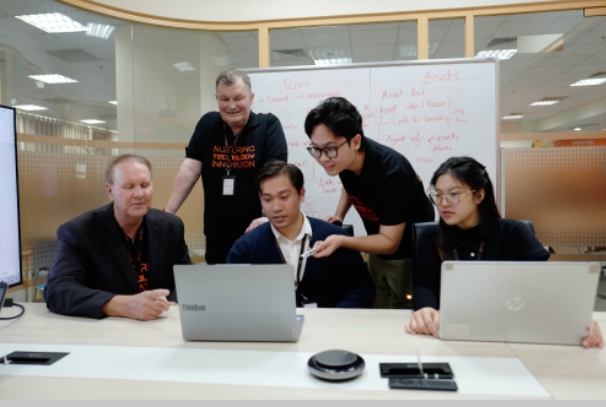
Our dedicated QA professionals collaborate closely with developers, product managers, and clients to ensure transparency and accountability. Through advanced automation, well-structured CI/CD pipelines, and comprehensive testing coverage, we deliver digital solutions that clients and end users can trust.
At PowerGate Software, QA is not an afterthought. It is the foundation that transforms agile methodology into a reliable path to long-term success.
About PowerGate Software
Founded in 2011, PowerGate Software is a global product studio helping startups and enterprises design, build, and scale digital products end-to-end. They combine product thinking with AI-Accelerated engineering to accelerate development, improve efficiency, and deliver high-quality, production-ready software.
With offices in Australia and the United States, and delivery teams across North America, Europe, and Asia-Pacific, PowerGate Software stays close to clients’ markets, leveraging a flexible delivery model.
As an ISO 9001 and ISO 27001 certified company, they bring proven quality assurance and robust information security practices into every project, delivering secure and scalable systems that enterprises can trust and confidently build upon.
- Website: https://powergatesoftware.com