

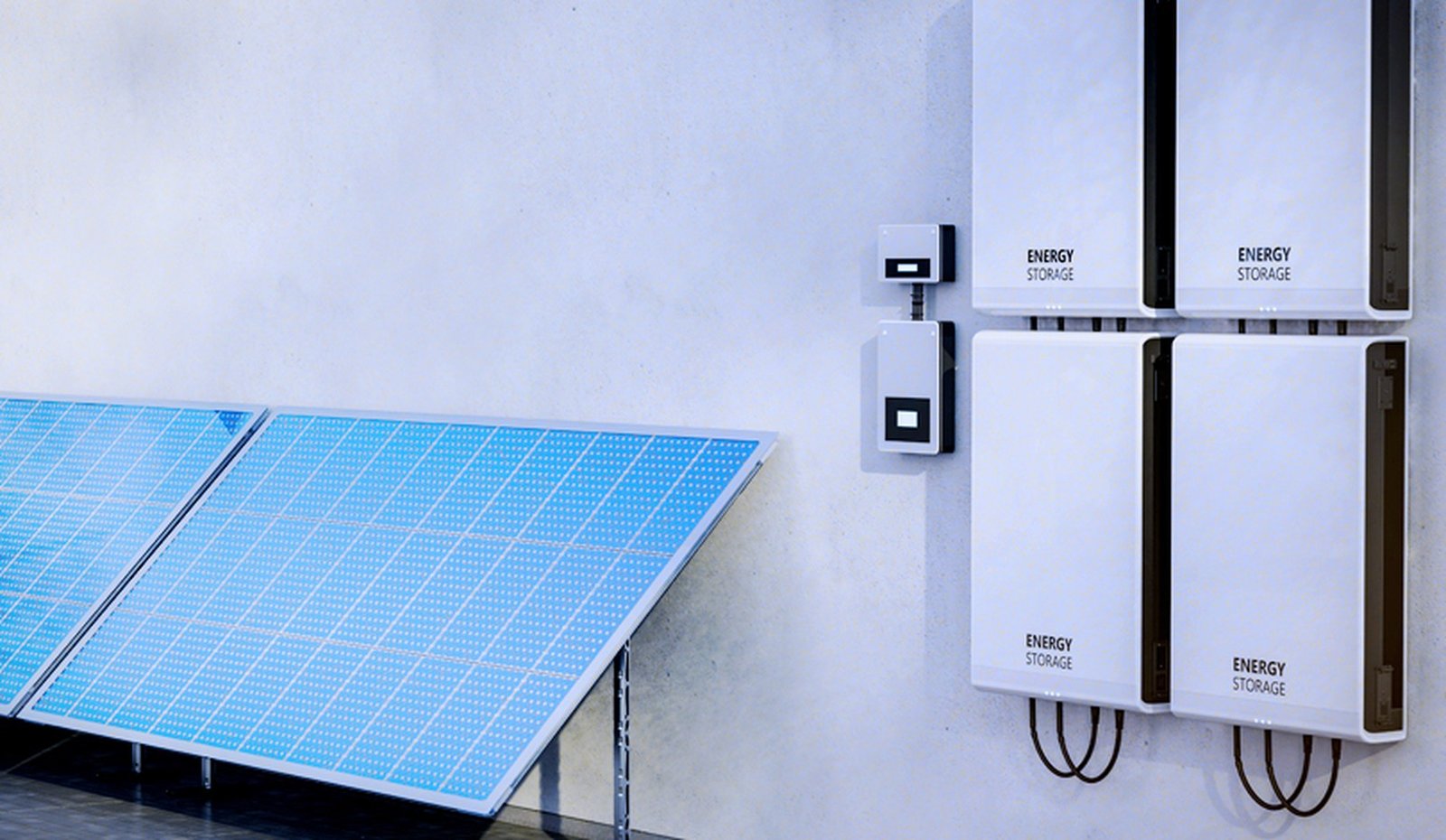
Solar panels can significantly reduce the amount of electricity a UK household needs to buy from the grid. However, there is one common challenge: solar generation and household electricity demand do not always happen at the same time.
Solar panels typically generate the most electricity during the middle of the day, while many households use more energy in the morning and evening. If nobody is at home during the day, a large proportion of the electricity generated by the panels may not be used immediately.
This is where a home battery can make a difference. By storing surplus solar energy and making it available when your household needs it, a solar battery can help increase self-consumption and make better use of your existing solar panels.
Why Is Solar Self-Consumption Important?
Solar panels generate electricity whenever there is sufficient sunlight, but household demand changes throughout the day.
For example, a typical home might generate more solar electricity than it needs around lunchtime. At the same time, electricity demand may increase later in the afternoon and evening when people return home, prepare meals, use appliances and charge devices.
Without energy storage, the household has fewer options for using this excess generation. A home battery provides another option: store the surplus electricity and use it later.
Instead of immediately sending unused solar generation to the grid, the battery can charge when solar production is higher than household demand. When solar production falls, stored energy can then be discharged to help supply the home.
This simple shift in timing can make solar generation more useful for everyday household consumption.
How Does a Solar Battery Work with Solar Panels?
A solar battery works as an energy storage system between electricity generation and household consumption.
During periods of strong solar production, electricity can be directed towards household appliances first. When generation exceeds immediate demand, the surplus can be used to charge the battery.
Later in the day, when solar generation decreases, the stored energy can be discharged to support household electricity use.
This creates a more flexible energy flow:
Solar generation → Household consumption → Battery storage → Later household consumption
The exact setup depends on the home, solar installation and battery system, but the principle is straightforward: use more of the electricity generated by your own solar panels instead of relying on the grid at times when your panels are not producing enough.
What Should You Look for in a Home Battery?
Not every household has the same energy needs, so battery capacity and system configuration are important considerations.
1. Suitable Battery Capacity
Battery capacity determines how much electricity can be stored. A system that is too small may not be able to capture enough surplus solar energy, while a much larger battery may not be fully utilised in some homes.
The right capacity depends on factors such as solar generation, household consumption patterns and when electricity is normally used.
For households looking for a compact storage solution, the Conow Lyra 2500 Pro provides a 2560Wh LFP battery capacity. This gives homeowners a practical amount of storage for shifting surplus solar electricity into periods of higher household demand.
2. Solar Input Capability
If you already have solar panels or are planning a new installation, it is also worth considering how much solar input the battery system can handle.
The Conow Lyra 2500 Pro supports up to 2400W of PV input and features four MPPTs. Multiple MPPTs can provide greater flexibility when working with different solar panel orientations or configurations.
For UK homes where roof space, orientation and shading can vary, having a flexible solar input configuration can be useful when designing an energy storage system.
3. Battery Chemistry
Battery longevity and safety are also important considerations for a home energy storage system.
The Lyra 2500 Pro uses an LFP (lithium iron phosphate) battery, a battery chemistry widely used in energy storage applications. For homeowners planning to use their battery regularly, choosing a system designed for repeated charging and discharging is an important part of the decision-making process.
Can a Home Battery Help with Dynamic Electricity Prices?
Solar self-consumption is only one part of home energy management. Electricity prices can also influence when it makes sense to use stored energy.
Some UK households are moving towards tariffs where electricity prices vary according to time or market conditions. In this situation, an intelligent home energy system can potentially help households make better use of cheaper electricity periods.
The Conow Lyra 2500 Pro includes AI HEMS, support for more than 1,000 dynamic tariffs, and AI-based energy-saving features. These functions are designed to help coordinate energy storage and household consumption according to changing energy conditions.
For a household with solar panels, this can create a more flexible approach: solar energy can be stored when generation is high, while battery usage can be managed according to household demand and electricity prices.
A More Flexible Way to Use Solar Energy
The main benefit of adding a home battery is not simply having more stored electricity. It is having greater control over when your solar energy is used.
Without storage, solar generation is closely tied to the time of day and weather conditions. With a battery, surplus generation can be shifted from one part of the day to another.
For example, solar energy generated during a bright afternoon could potentially be stored and used later for cooking, lighting, entertainment or other household electricity needs.
This can be particularly useful for households where daytime solar generation is relatively high but electricity consumption increases in the evening.
Is a Home Battery Right for Every UK Household?
A battery is not automatically the right choice for every home. The potential benefits depend on several factors, including the size of the solar installation, electricity consumption, household routines, available space, electricity tariffs and the way the system is installed.
Homeowners should also consider the battery’s usable capacity, power output, solar input, compatibility with their existing equipment and available installation options before making a decision.
However, for households that regularly generate surplus solar electricity and want to use more of it themselves, energy storage can be a practical way to improve the flexibility of a solar system.
Making More of the Solar Energy You Already Generate
Solar panels are an important step towards generating renewable electricity at home, but the timing of generation can be just as important as the amount generated.
A home battery can help bridge the gap between when solar electricity is produced and when household electricity is needed. By storing surplus generation and releasing it later, it can help households increase solar self-consumption and reduce their reliance on grid electricity during certain periods.
For homeowners looking for an integrated solution with solar input, battery storage and intelligent energy management, the Conow Lyra 2500 Pro combines a 2560Wh LFP battery, 1500W bi-directional inverter, 2400W PV input, four MPPTs and AI-based energy management in one system.
As UK households continue to look for more flexible ways to manage solar generation and electricity consumption, combining solar panels with energy storage can provide another way to get more value from the electricity already being generated at home.