The change is even easier to notice with electric vehicles. An EV is built around a large battery, but the technology surrounding that battery is just as important to the ownership experience. There are charging networks, mobile applications, onboard computers, sensors, navigation systems and energy-management software. The car has become one component in a much larger digital setup.In that context, a humble car charger has a valuable function. It ensures the minor devices’ operation while the big device does the job of transporting all of them to the destination. It might seem as though that is an easy thing to do, but it’s part of a broader trend in vehicle technology: today’s cars rely on a network of devices, not a single machine.
The Phone Is No Longer Just a Phone in the Car
For some drivers, their smartphone is the vehicle.
Can give turn-by-turn directions, traffic info, music, messages, parking info, and access to charging services. For instance, in newer cars, a smartphone can unlock the car or execute other operations that previously required a car key.
The negative part is quite clear. All of them use battery power!
Navigation, for instance, is a very suitable application. A GPS-enabled phone with the screen on and a mobile signal turned on is working hard, compared with a phone left on the user’s desk or in his pocket. With a long drive, add a few calls and streaming audio, and before you know it, the battery is gone.
The charging connection is thus a very convenient solution to a problem. It ensures that the phone remains in the line of service the driver might need it in.
EV Charging Is a Different Kind of Refueling
The most obvious technological change in the automotive world is the move from fuel tanks to batteries. But replacing petrol with electricity has also changed the routine around refueling.
A conventional car usually needs a deliberate stop at a fuel station. An electric car can often be connected to a charger while it is parked at home, at work or somewhere along a journey.
That difference has encouraged the development of charging software as well as charging hardware. Drivers can use applications to find stations, check whether a charger is occupied, start a charging session and sometimes see how much energy has already been added.
The charging network itself is growing quickly. The International Energy Agency reported more than five million public charging points worldwide at the end of 2024, with over 1.3 million added during that year.
The important point is not simply the number of chargers. It is the growing amount of technology behind them.
A High-Power Charger Does Not Tell the Whole Story
Charging speed is one of the first specifications people notice when comparing EV equipment. A charger capable of delivering a large amount of power sounds like an obvious choice.
Real-world charging is less straightforward.
The vehicle has its own limits. The battery management system controls how energy is accepted, and charging behaviour can change depending on battery temperature and how full the battery already is. A charging station may be capable of delivering more power than the vehicle can use at a particular moment.
This is why two charging sessions can feel different even when they happen at the same station.
The lesson is familiar from other areas of technology. A device’s maximum specification does not always describe what a user will experience. The different parts of the system have to work together.
For EV owners, compatibility and charging behaviour can therefore be more useful considerations than simply looking for the largest number on a specification sheet.
Home Charging Has Changed the Daily Routine
One of the quieter advantages of owning an EV is that charging can happen while the vehicle is doing nothing.
A driver gets home, parks, connects the car and walks inside. If the vehicle remains parked overnight, there may be no reason to think about charging again until the next morning.
That is quite different from the traditional refueling routine. Instead of asking where to stop for fuel, an EV owner may simply make charging part of the parking routine.
It also opens the door to smarter use of electricity. A household that has solar panels, home battery storage and an EV has several pieces of electrical equipment that can potentially be coordinated.
That is where automotive technology starts crossing into another field: home energy management.
The Charging Cable Is Only the Visible Part
When someone plugs an EV into a charging point, the physical cable is probably the most obvious part of the process. Behind it, however, several systems are involved.
The vehicle communicates with the charging equipment. The charging system manages the flow of electricity. The battery management system monitors conditions inside the battery. Other electronics handle safety and control.
Software sits across much of this process.
That software can make charging easier for drivers and easier for network operators to manage. A station operator can monitor equipment remotely, while a driver can receive information through an application instead of standing beside the vehicle to check its status.
As charging networks expand, this digital layer becomes increasingly important. A large network with poor software would be frustrating even if the physical chargers were excellent.
The Smaller Electronics Inside the Cabin Still Need Power
The central EV battery is most often the focus of discussion since it dictates the range of the vehicle. But there’s another batch of batteries inside the car as well.
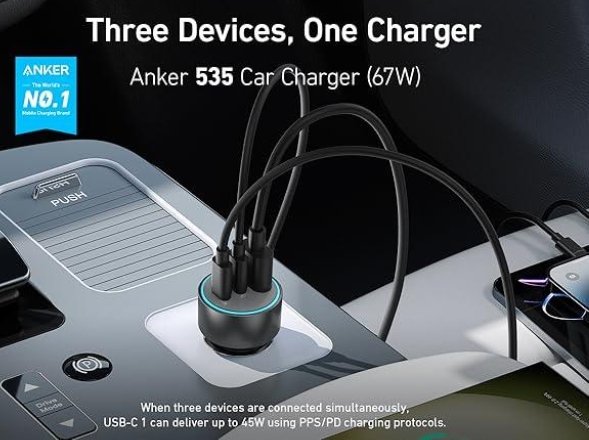
Obviously, phones are the example, but it’s not the only one. Wireless earbuds, smartwatches, cameras, tablets and portable computers are allowed for passengers. It is easy to have a family with several devices, which must be charged before they arrive at the destination, after they have been travelling for several hours.This is where a car charger fits into the connected-car system.
It is not an EV charger and it will not charge the vehicle’s traction battery. Its role is far less significant: to supply power to compatible personal electronics from the car.
It’s a distinction that needs to be remembered. EV charging is about the charge needed to propel the car, and cabin charging is about the charge needed for the digital devices individuals use while travelling.
Both have become relevant because the modern journey contains more technology than it once did.
Smart Charging Could Make Timing More Important Than Speed
There is an interesting question emerging around EV charging: does a vehicle always need to charge immediately?
Suppose a car arrives home at 6 p.m. with plenty of range remaining. It will not be needed again until 7 a.m. The battery has a large window in which it can be charged.
A smart charging system can potentially use that window rather than treating the moment the cable is connected as the moment maximum charging should begin.
Depending on the system, charging could be scheduled around electricity prices, household demand or the driver’s departure time. The idea is simple, but it becomes more significant when thousands or millions of vehicles are connected to the electricity network.
If every EV begins charging at exactly the same time, the demand pattern looks very different from a situation in which charging is spread across several hours.
EVs Could Eventually Become Part of the Energy System
The relationship between cars and electricity may go further than simply consuming power.
Vehicle-to-home and vehicle-to-grid systems are being developed to allow compatible electric vehicles to send stored energy back to a home or electricity network. In that model, an EV is not only a vehicle with a battery. It can also become a temporary energy store.
There are still practical limitations. The vehicle, charger, software and electricity system all need to support the required technology, and regulations differ between markets.
Even so, the concept changes how the battery can be viewed.
A battery that spends most of its time sitting in a driveway contains stored energy. If the right technology is available, that stored energy could potentially have another use.
This is one reason EV charging has become a topic for energy companies and technology developers, not just car manufacturers.
The Most Useful Technology Is Often the Least Noticeable
Some automotive technologies are designed to impress. Large screens, advanced driver assistance and rapid acceleration make obvious headlines.
Other technologies are valuable precisely because they are easy to forget.
A charger that keeps a phone alive during a long trip is one example. So is software that quietly schedules an overnight charging session. A navigation system that suggests a charging stop before the battery becomes low is another.
None of these features needs to dominate the driver’s attention. In fact, the better they work, the less often the driver may need to think about them.
That is usually a good sign for consumer technology. When a system removes friction without creating another task, people tend to notice the convenience rather than the technology behind it.
What a Connected Car May Look Like Next
The next stage of connected vehicles will probably involve more cooperation between systems that were previously separate.
A car could know how much energy it has, where it is going, when it needs to arrive and where charging is available. A home energy system could know when solar generation is highest. A charging platform could understand electricity demand. The driver’s phone could provide another layer of information.
Individually, none of these ideas is particularly revolutionary.
Putting them together is where things become interesting.
The result could be a vehicle that makes more decisions about energy in the background while leaving the driver with a much simpler experience. Instead of constantly checking battery levels and charging availability, the driver may only need to tell the system when the car is required.
That is a very different idea from simply building a faster charger.
Final Thoughts
The technology inside a modern vehicle extends well beyond the parts responsible for movement. Electric cars have brought batteries and charging infrastructure into the centre of the conversation, but phones, applications, navigation systems and other connected devices have become part of the journey too.
That makes everyday charging accessories relevant in their own way. A car charger is nowhere near as powerful as an EV charging system, nor is it supposed to be. Its purpose is much simpler: keeping the personal electronics that people depend on ready to use.
The more interesting story is what happens around these individual technologies. Vehicles are becoming connected to charging networks, homes and digital services, while the devices carried by passengers are becoming increasingly important to the driving experience. The future of automotive technology may therefore be less about one breakthrough device and more about getting all these smaller and larger systems to work together without making the driver think about them.