
Outdoor lighting works best when it does more than make a garden bright. A thoughtful plan helps people move safely, makes entrances easier to recognize, and reveals the trees, walls, and planting that give a property its character. The most appealing results usually come from several gentle layers rather than one powerful fixture.
Spotlights, lanterns, and low-voltage landscape fixtures each serve a different purpose. When they are positioned with care, they can guide attention from the gate to the front door, extend the use of a patio, and give the garden depth after sunset. The key is deciding what needs to be seen and choosing the right type of light for that job.
Start With Safety and Movement
Walk through the property after dark and follow the routes that residents and visitors actually use. Pay attention to steps, path turns, changes in level, gates, driveways, and the distance between parking areas and entrances. These locations should be understandable without flooding the entire yard with light.
Use small pools of illumination to create a clear sequence. A light near the gate establishes the starting point, softer fixtures mark the path, and a brighter entrance light confirms the destination. Keeping some areas darker preserves contrast and makes the useful light easier to notice.
Use Spotlights to Create Focal Points
Spotlights are designed to direct attention. They can emphasize the trunk and canopy of a tree, a textured stone wall, a sculpture, or an architectural column. Their focused beam makes them useful for features that deserve to stand apart from the surrounding landscape.
When selecting Outdoor Spotlights, consider both beam width and aiming flexibility. A narrow beam can highlight a tall, slender feature, while a wider beam may suit a broad tree or section of wall. Position the fixture so that the effect is visible but the light source is not aimed toward windows, seats, or neighboring properties.
Restraint is important. If every tree and wall receives the same intensity, the garden can appear flat. Choose a few meaningful focal points and allow shadows to separate them.
Let Lanterns Welcome People Home
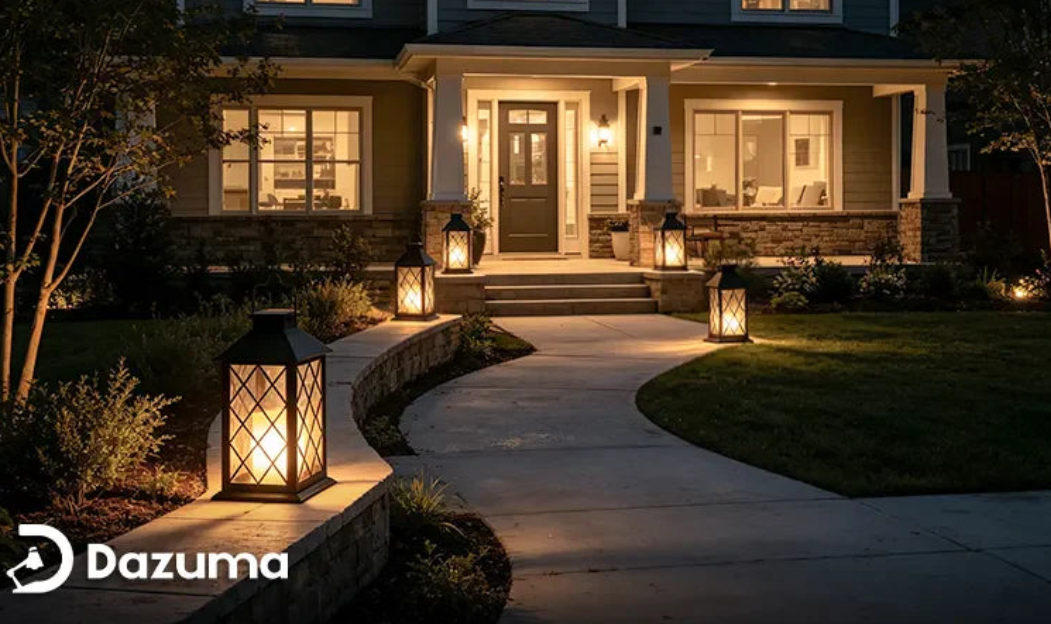
Lanterns have a naturally familiar and welcoming presence. They work well beside front doors, on porch ceilings, at gates, or near covered seating areas. During the day, their shape contributes to the home’s exterior style; at night, they provide a visible point of arrival.
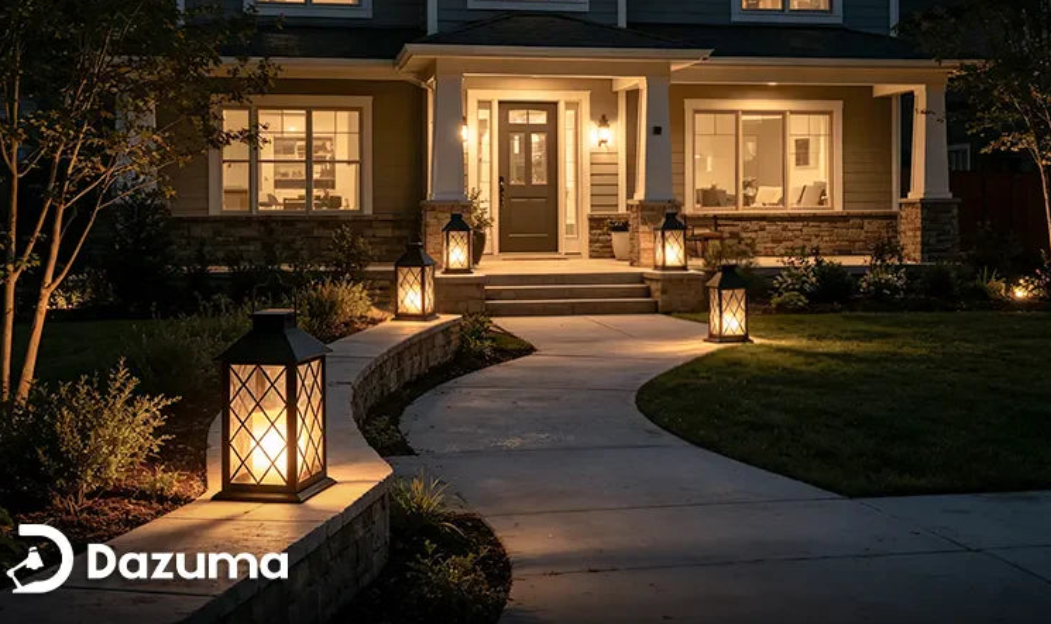
Well-scaled Outdoor Lanterns should relate to the size of the door, porch, columns, and nearby walls. A fixture that is too small may disappear from the street, while an oversized design can crowd a narrow entrance. Clear glass creates sparkle but may expose the bulb; frosted or textured glass usually produces a softer glow.
Build the Supporting Layer With Low-Voltage Lighting
Low-voltage systems are commonly used for path lights, small accent fixtures, garden lights, and other landscape applications. They make it possible to distribute light across several locations while keeping each source relatively subtle.
Outdoor Low Voltage Lights can form the connecting layer between a highlighted feature and the main entrance. Place them near genuine decision points such as steps, turns, and level changes rather than lining every edge at equal intervals. Alternating fixtures from one side of a walkway to the other often looks more natural than creating two rigid rows.
Keep Color and Brightness Consistent
Light color strongly affects the atmosphere of an outdoor space. Warm white light generally complements timber, brick, stone, and planting, while cooler light can create a sharper appearance. Noticeably different color temperatures within the same view may make the garden feel disconnected.
Brightness should follow a hierarchy. The entrance can be one of the clearest points, focal features can receive controlled emphasis, and path lighting can remain softer. This balance helps the eye understand the space and prevents glare.
Check the View From Inside and Outside
Outdoor lighting is often judged only from the garden, yet it also changes the view through windows. Look outside from the living room, kitchen, and bedrooms to make sure fixtures are not shining into the house. A softly lit tree or wall can improve the nighttime view, while a visible bare bulb can become distracting.
Plan for Weather and Maintenance
Choose fixtures intended for the conditions of their specific locations. A covered porch, an exposed wall, and a light installed near damp soil face different levels of moisture, debris, sunlight, and temperature change. Follow product instructions and use a qualified professional where new wiring or electrical work is required.
Keep lenses accessible for cleaning, trim plants before they block beams, and check fixture positions as the garden changes. With regular care and a layered plan, outdoor lighting can make a property easier to navigate while creating a welcoming atmosphere that feels intentional rather than overlit.