
Anyone who has tried to wash a greasy pan under cold water knows the problem: the oil smears around instead of lifting off. Warm water changes that, and the same principle applies when cleaning farm machinery, trucks, and shop floors. A hot water pressure washer combines three variables, and each does a different job. Heat softens oily residue, pressure breaks it loose, and flow carries it away.
Heat Softens What Cold Water Cannot
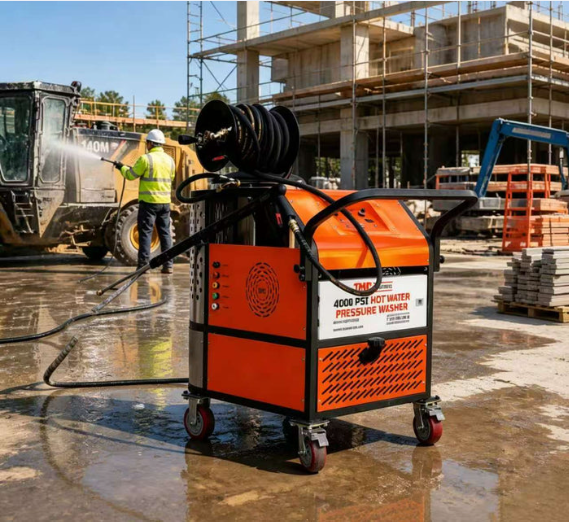
Grease, oil, and road film cling to surfaces because they are thick at low temperatures. Raising the water temperature thins them, so the same spray removes more material in a single pass. This hot water power washer heats water to 93 degrees Celsius with a diesel-fired burner, which the product page says takes under three minutes. Heated water also helps in Canadian winter conditions, when cold water on cold metal makes oily dirt even stiffer.
Pressure and Flow Are Not the Same Thing
Pressure is the force of the water against a surface, measured in pounds per square inch. Flow is the volume of water delivered, measured in gallons per minute. This unit delivers 3,600 to 4,000 pounds per square inch at 4 gallons per minute. A garden hose has flow but little pressure, while a very narrow nozzle can have pressure but little flow. Good cleaning needs both, much as a jackhammer needs force and a river needs volume to move gravel.
What Drives the Pump and the Burner
An electric motor rated at 7.5 horsepower on a 230-volt circuit turns a gear-driven triplex plunger pump, which pushes water through the heating coil. Electric power means the unit makes no engine exhaust at the pump, though the diesel burner still produces combustion gases, so the washer belongs in a well-ventilated area. A flame detector monitors the burner and shuts off fuel when the flame goes out, and a thermostat knob sets the water temperature.
Hose, Wand, and Nozzles Shape the Result
The 85-foot hose on a reel gives the operator a long reach without moving the machine every few minutes. The 36-inch wand carries quick-connect nozzles in four spray angles from 0 to 40 degrees plus a chemical nozzle. A narrow angle concentrates force for stubborn spots, while a wide angle covers more area with less risk of damaging paint. Starting with a wide nozzle and moving narrower only when needed is a careful habit.
Safe Habits for Hot Water Work
Hot water adds a burn risk to the usual pressure-washer hazards, and winter adds the risk of freezing. Water left in the pump and hose can freeze and crack parts, so draining the system before storage in cold weather is important. A few habits also reduce the danger during use:
- Keep the spray away from skin and feet
- Wear eye protection and waterproof gloves
- Never point the wand at people
- Let the burner cool before moving it
Matching a Hot Water Power Washer to the Work
A machine like this suits oil and gas, construction, transport, and agriculture, where grease and mud are daily problems. For lighter cleaning around a house, a smaller electric pressure washer may be enough, while an industrial pressure washer with heated water earns its place when the dirt is oily and the job repeats often. The decision comes down to how stubborn the dirt is and how often the cleaning is needed. TMG Industrial offers the TMG-HW42E for operations that need heated water on a regular basis.