The desktop 3D printer is no longer a niche piece of equipment. Over the past five years, FDM printers have become a standard fixture in home workshops, school classrooms, small business back offices, and community makerspaces worldwide.
That demand has created a wide and sometimes overwhelming marketplace. Walk into the wrong channel, and you’ll find inconsistent quality, misleading spool weights, and materials that clog your hotend within the first fifty grams. Choose the right one, and you buy reliable filament at a fair price, delivered on time, backed by a brand that stands behind its product.
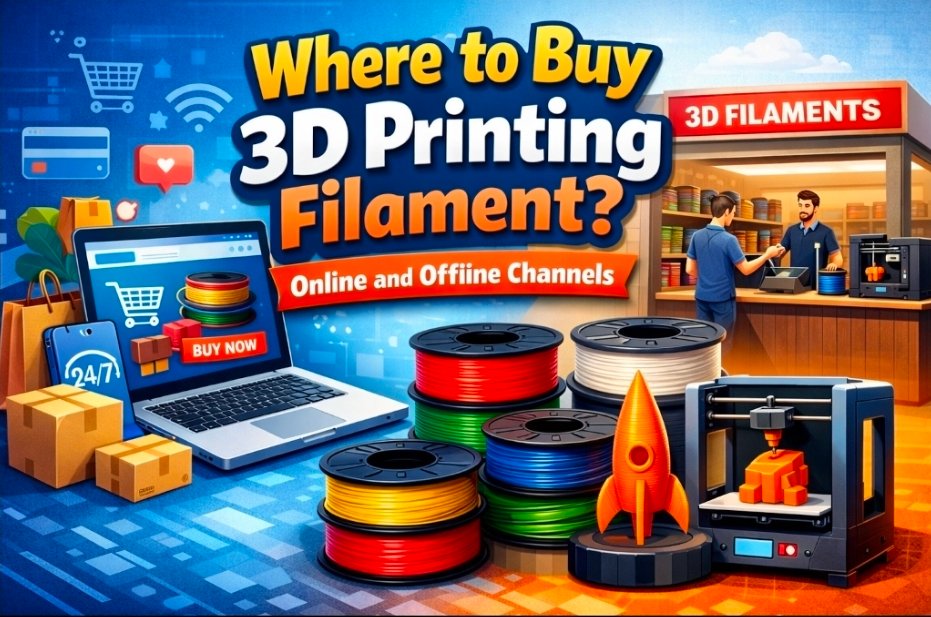
This article is a practical guide to every major channel where you can buy 3D printing filament — online and offline — with honest pros and cons for each, so you always know where to go for the right material at the right price.
Online Channels: The 4 Major Platforms for Buying 3D Printing Filament
The majority of buying 3D printing filament purchases happen online, and for good reason — the selection is broader, prices are competitive, and delivery is fast. But not all online platforms are equal. Here’s what you need to know about each one before you add to cart.
- Amazon
Amazon is the default starting point for most filament buyers, and it earns that position through sheer convenience. Prime delivery, a vast selection of brands across every material type, and a straightforward returns process make it easy to buy 3D printing materials quickly without much friction.
The downside is quality consistency. Amazon’s marketplace model means that well-reviewed brands sit alongside low-cost alternatives with inflated ratings, and counterfeit or mislabeled products do appear from time to time. The best practice on Amazon is to filter by established brands, read recent reviews critically (particularly one- and two-star reviews for patterns), and be cautious of suspiciously low prices on materials that have known quality floors.
Best for: Buyers who prioritize fast delivery and easy returns, and who know the brands they’re looking for.
- AliExpress
AliExpress is where budget-conscious buyers go when price is the primary driver. Filament prices on AliExpress can be significantly lower than Amazon or brand websites — sometimes by 40–60% for comparable materials — making it an attractive option for high-volume users willing to absorb some variance in quality.
The trade-offs are real, however. Shipping times from international sellers can run two to four weeks, quality control varies widely between sellers, and resolving disputes requires patience. For users who are price-sensitive and willing to test and vet individual sellers over time, AliExpress can deliver solid value. For those who need reliability on a deadline, it carries more risk.
Best for: High-volume buyers comfortable with longer lead times and willing to invest time in finding trustworthy sellers.
- eBay
eBay occupies a useful niche in the filament marketplace — it’s one of the best places to buy 3D printing materials in bulk, find discontinued colors or specialty materials, or pick up partial spools at a discount. Sellers include both individual hobbyists offloading unused stock and small resellers operating outside the major platform ecosystems.
The caveat with eBay is that consistency is low by design. You’re often buying one-off listings rather than a repeatable supply chain, which makes it a poor choice as a primary filament source for anyone printing regularly. It’s better treated as a supplementary channel for specific finds.
Best for: Opportunistic buyers hunting for bulk deals, rare materials, or discounted stock.
- Brand Official Websites
Buying the 3D printing filament directly from a manufacturer’s official website is the best place to buy filament for 3D printer users who prioritize quality assurance, accurate product specifications, and direct customer support. When you purchase from a brand’s own storefront, you’re getting the product as the manufacturer intended — no third-party handling, no relabeled stock, and no uncertainty about what’s actually on the spool.
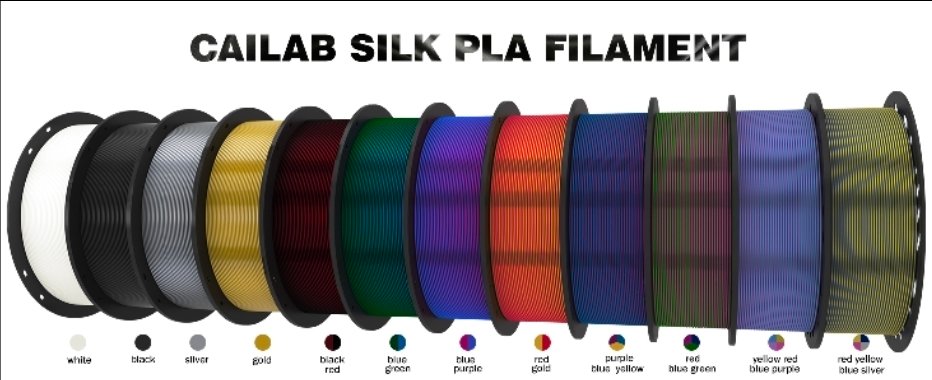
CaiLab is one of the reliable brands in many 3D printing enthusiasts’ minds. Their official website is a strong example of what a direct-brand purchasing experience should look like.
With full material specifications published for each product, clearly stated spool and filament net weights, and a product range covering PLA, PETG, and specialty materials, CaiLab’s every spool is precision-engineered for consistent flow, with vibrant, fade-resistant colors, and all materials are RoHS and REACH compliant.
Whether you’re stocking up for a long project run, looking for your first reliable brand to settle on, or simply tired of diagnosing print failures caused by inconsistent filament, CaiLab is built to be the last filament source you need to search for.
Best for: Everyone who has the demands on 3D printing!
Physical Retail: When Buying In-Store Makes Sense
Online purchasing dominates the filament market, but physical retail still plays a meaningful role, particularly for buyers who need material immediately, want to inspect packaging before purchasing, or simply prefer the in-store experience.
Electronics and Tech Retailers: Dedicated electronics and tech retailers represent the strongest physical option for buying 3D filament. Micro Center, for instance, carries a notably broad filament selection in its US stores — multiple brands, a range of materials, and competitive pricing that often matches online rates. For buyers located near a Micro Center or similar specialist retailer, in-store purchasing eliminates shipping wait times entirely and allows for direct inspection of packaging and spool condition.
Office Supply Chains: Retailers like Staples carry entry-level filament in a small number of materials and colors. For a first-time buyer who wants to pick something up locally before committing to a preferred brand, office supply chains cover the basics.
Local 3D Printing Shops and Makerspaces: Independent 3D printing shops and community makerspaces are an underutilized resource for filament buyers. Local shops often stock specialty materials that don’t appear on mainstream retail shelves, and the staff typically have hands-on experience with the products they carry. Makerspaces frequently sell 3D printing filament to members at reasonable prices and can offer direct advice on material selection based on your specific printer and project.
Conclusion
The question of where to buy 3D printer filament has more answers than ever — and each channel serves a different priority. Amazon and AliExpress offer convenience and price flexibility; eBay suits opportunistic buyers; brand official websites deliver the highest quality assurance. Physical retail fills the gaps when speed matters more than selection. Regardless of where you shop, the deciding factors remain the same: diameter accuracy, honest spool weights, certifications, return policies, and community reputation.
For buyers who want to take that guesswork off the table entirely, CaiLab is worth making your default. With an ISO 9001-certified production facility, a ±0.02mm diameter tolerance, and a material range spanning everyday PLA to specialty PETG-CF, CaiLab brings manufacturing-level consistency to every spool — so the only variable left is what you choose to build.