Navigating the world of electric bike conversions becomes considerably more complex when legal compliance enters the equation. While high-power systems offer thrilling performance, most riders need street-legal solutions for daily commuting, errands, and recreational riding on public roads and bike paths.
This comprehensive guide explores 250W–750W conversion kits designed specifically for legal road use in the UK and United States, helping you transform your bicycle into a compliant, efficient, and practical electric commuter.
Understanding E-Bike Legal Classifications
Before selecting a conversion kit, understanding your region’s regulations ensures legal, hassle-free riding.
United Kingdom Legal Requirements
The UK maintains strict e-bike regulations designed to classify electric bicycles as bicycles rather than motor vehicles:
Power Limit: 250 watts continuous rated power (motor can briefly exceed this during surges, but continuous rating must be 250W)
Speed Limit: Motor assistance must cut off at 25 km/h (15.5 mph). Riders can pedal faster manually, but motor provides no assistance above this speed.
Pedal Assist Only: Throttles are prohibited above 6 km/h. Walk-assist function up to 6 km/h is permitted without pedaling.
Age Requirement: Minimum rider age of 14 years
No Registration Required: Compliant e-bikes require no license, registration, insurance, road tax, or helmet (though helmets strongly recommended)
Where You Can Ride: Anywhere standard bicycles are permitted—roads, cycle lanes, shared paths (where cycling allowed)
The 250W street-legal ebike conversion kit exemplifies UK-compliant design with 48V 250W motor, speed-limited display, and pedal-assist sensor meeting all regulatory requirements.
European Union Regulations
EU regulations closely mirror UK rules: 250W maximum, 25 km/h speed limit, pedal-assist only above 6 km/h. These standards apply across all EU member states, though some countries add specific requirements (lights, reflectors, bells).
United States Three-Class System
The US employs a more nuanced approach with three distinct e-bike classes:
Class 1 E-Bikes:
- Pedal-assist only (no throttle)
- Maximum assisted speed: 20 mph (32 km/h)
- Motor power: Generally 750W maximum (varies by state)
- Allowed: Most bike paths, trails, and roads where bicycles permitted
Class 2 E-Bikes:
- Throttle permitted (can operate without pedaling)
- Maximum speed (throttle or assist): 20 mph (32 km/h)
- Motor power: Generally 750W maximum
- Allowed: Most roads; some bike path restrictions apply
Class 3 E-Bikes:
- Pedal-assist only (no throttle, or throttle limited to 20 mph)
- Maximum assisted speed: 28 mph (45 km/h)
- Motor power: Generally 750W maximum
- Allowed: Roads and some bike paths; typically restricted from natural surface trails
- Some states require helmet regardless of age
State Variations: Individual states may modify these classifications. Some permit higher wattages (up to 1000W in certain states), while others maintain stricter limits. Always verify your specific state regulations.
Why Legal Compliance Matters
Riding non-compliant e-bikes on public roads creates several risks:
Legal Consequences: Fines, vehicle seizure, points on driving license (if applicable), potential criminal charges for serious violations
Insurance Issues: Accidents on non-compliant e-bikes may void insurance coverage, leaving you personally liable for damages
Access Restrictions: Non-compliant e-bikes prohibited from bike paths, trails, and other cycling infrastructure
Safety Concerns: Excessive speed or power in cycling environments endangers riders and others
250W Systems: UK and EU Compliance
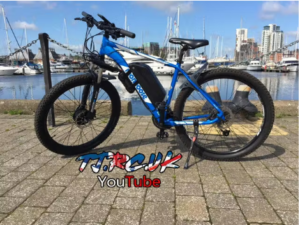
For riders in the UK, EU, or those seeking access to maximum cycling infrastructure in the US, 250W systems represent the gold standard.
Performance Characteristics of 250W Motors
Realistic Expectations:
- Top Assisted Speed: 25-30 km/h (15-19 mph)
- Hill Climbing: Moderate assistance on gradual to moderate inclines (5-10% grades)
- Acceleration: Gentle, progressive power delivery
- Range: 40-70 km per charge (battery dependent)
- Rider Input: Requires active pedaling; motor amplifies effort rather than replacing it
Ideal Use Cases:
- Flat to moderately hilly urban commuting
- Recreational riding on roads and bike paths
- Fitness cycling with assistance for longer distances or into headwinds
- Riders wanting exercise benefit with reduced effort
Limitations:
- Steep hills require significant rider effort
- Not suitable for very heavy cargo or riders
- Limited assistance for very fast riders (cuts at 25 km/h)
36V vs 48V in 250W Applications
Both voltages accommodate 250W motors, but characteristics differ:
36V 250W Systems:
- Lower system voltage (42V fully charged)
- Typically paired with 10-15Ah batteries
- Slightly gentler power delivery
- Adequate for flat terrain and light riders
- More common in budget-oriented kits
48V 250W Systems:
- Higher system voltage (54.6V fully charged)
- Usually paired with 11-16Ah batteries
- Crisper throttle response and acceleration
- Better hill-climbing torque
- Maintains power better as battery depletes
- Preferred for varied terrain
The 48V 250W ebike conversion kit leverages higher voltage for improved performance within legal 250W limits, delivering 30-35 km/h capability with 40-70 km range.
Front vs Rear Motor for 250W
Front Motor Advantages:
- Simpler installation (no derailleur interference)
- Preserves rear wheel for easy tire changes
- Creates all-wheel-drive feel with rear pedal power
- Better weight distribution on some frames
- Universal compatibility (no gear system considerations)
Front Motor Disadvantages:
- Reduced traction on wet or loose surfaces (especially hills)
- Slightly unusual handling feel initially
- Front fork must handle motor weight
Rear Motor Advantages:
- Superior traction (weight transfer during acceleration)
- More natural bicycle handling
- Better for hilly terrain
- Preferred by experienced cyclists
Rear Motor Disadvantages:
- More complex installation (gear compatibility required)
- Tire changes more involved
- Must specify freewheel or cassette compatibility
Recommendation: Front motors suit flat urban environments and prioritize installation simplicity. Rear motors better serve hilly terrain and riders valuing traditional bicycle handling.
Battery Sizing for 250W Systems
Modest power consumption allows smaller batteries with impressive range:
36V 10-13Ah (360-468 Wh):
- Range: 30-50 km
- Weight: 2-2.5 kg
- Sufficient for short commutes (under 15 km daily)
36V 15-17Ah (540-612 Wh):
- Range: 45-65 km
- Weight: 2.8-3.5 kg
- Ideal for longer commutes or recreational rides
48V 11-13Ah (528-624 Wh):
- Range: 40-60 km
- Weight: 2.5-3 kg
- Popular choice balancing range and weight
48V 15-17Ah (720-816 Wh):
- Range: 55-75 km
- Weight: 3.2-4 kg
- Maximum range for 250W applications
Factors Affecting Range:
- Rider weight (heavier riders reduce range 10-20%)
- Terrain (hills dramatically increase consumption)
- Assistance level (higher levels drain faster)
- Wind conditions (headwinds reduce range significantly)
- Temperature (cold weather reduces capacity 20-30%)
- Tire pressure (underinflated tires increase resistance)
Complete 250W Kit Components
Quality street-legal kits include:
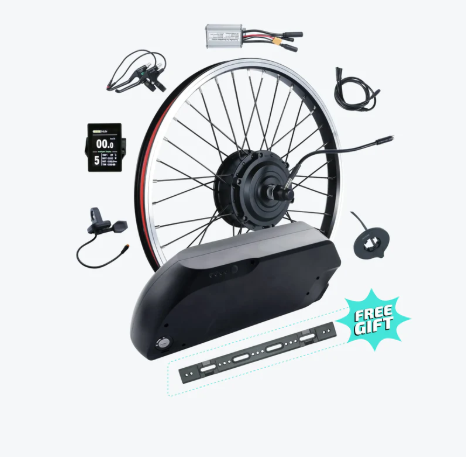
Motor Wheel: 250W rated brushless hub motor (front or rear)
Battery: 36V or 48V lithium pack with mounting hardware
Controller: Matched to motor and battery voltage, programmed for 25 km/h cutoff
Display: LCD or LED showing speed, battery level, assistance level, distance; must show speed limit compliance
Pedal Assist Sensor (PAS): Detects pedaling and activates motor (required for UK/EU compliance)
Brake Sensors: Cut motor power when brakes applied (essential safety feature)
Throttle: Optional (illegal above 6 km/h in UK/EU, permitted in US Class 2)
Wiring Harness: Waterproof connectors and color-coded cables
Installation Hardware: Torque arms, axle nuts, cable ties, tools
Documentation: Installation instructions, compliance certificates
The EZ Rider Kit provides comprehensive components designed specifically for straightforward legal compliance and hassle-free installation.
500W-750W Systems: US Legal Compliance
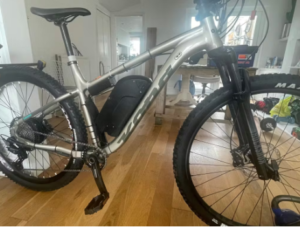
American riders benefit from higher power allowances, making 500W-750W systems popular choices.
Performance Advantages of 500W-750W
Compared to 250W systems, mid-power motors deliver significantly enhanced capabilities:
500W Performance:
- Top Speed: 35-40 km/h (22-25 mph) with pedaling
- Hill Climbing: Strong assistance on moderate to steep inclines (10-15% grades)
- Acceleration: Noticeably quicker than 250W
- Cargo Capability: Handles 15-25 kg additional weight comfortably
- Range: 35-60 km (higher power = faster battery depletion)
750W Performance:
- Top Speed: 40-45 km/h (25-28 mph) with pedaling
- Hill Climbing: Excellent assistance on steep inclines (15-20% grades)
- Acceleration: Rapid, motorcycle-like from stops
- Cargo Capability: Handles 25-35 kg additional weight
- Range: 30-55 km (consumption increases with power)
Practical Advantages:
- Reduced arrival time for commutes
- Less physical exertion (valuable when arriving at work)
- Viable for heavier riders or substantial cargo
- Handles challenging terrain confidently
- More enjoyable recreational riding
The 500W-750W ebike conversion kit typically pairs with 48V 16-20Ah batteries, delivering 40-60 km range even with vigorous riding and challenging terrain.
Display and Control Systems for Legal Compliance
Your display/controller combination determines legal compliance and user experience.
Essential Display Features
Speed Display:
- Shows current speed accurately
- Digital readout (analog inadequate for compliance verification)
- Large, easily readable numbers
Assistance Level Indicator:
- Shows current PAS level (typically 0-5 or 0-9)
- Clear visual indication for quick adjustment
Battery Level:
- Percentage or bar graph showing remaining charge
- Voltage reading helpful for advanced users
Trip/Odometer:
- Distance tracking for single rides and lifetime mileage
- Useful for maintenance scheduling and range planning
Error Code Display:
- Shows diagnostic codes when problems occur
- Essential for troubleshooting
Advanced Display Functions
Speed Limiting:
- Programmable maximum assisted speed
- Critical for legal compliance (25 km/h UK/EU, 20 or 28 mph US)
- Should be password-protected to prevent tampering
Walk Assist:
- Provides 6 km/h power for walking bike uphill or through crowds
- Legal in UK/EU when not riding
Backlight Adjustment:
- Variable brightness for day/night visibility
- Auto-dimming on some premium displays
Customizable PAS Levels:
- Adjust power delivery for each assistance level
- Fine-tune system to personal preference
USB Charging:
- Charges phones and devices from main battery
- Convenient for navigation and communication
Legal Compliance Programming
Quality displays designed for street-legal use include:
Factory Speed Limits:
- Pre-programmed for regional compliance
- UK/EU models limited to 25 km/h
- US models configurable for 20 or 28 mph
Tamper Resistance:
- Password-protected settings prevent casual modification
- Maintains legal compliance if bike changes hands
Assistance Cutoff:
- Motor stops providing power at speed limit
- Can still pedal faster manually
- Display should clearly indicate when limit reached
Pedal-Assist Requirement (UK/EU):
- Motor only activates when pedaling detected
- Throttle disabled above 6 km/h
- Walk-assist function permitted
Throttle Considerations
UK and EU: Throttles prohibited above 6 km/h. Walk-assist (6 km/h maximum) permitted.
US Class 1: No throttle permitted
US Class 2: Throttle allowed to 20 mph maximum
US Class 3: No throttle, or throttle limited to 20 mph with pedal-assist to 28 mph
Many conversion kits include throttles that can be disconnected or disabled via controller programming for markets where prohibited.
Installation Considerations for Street-Legal Kits
Legal compliance extends beyond motor specifications to proper installation.
Frame Compatibility
Dropout Width:
- Rear motors typically require 135mm spacing (mountain bike standard)
- Front motors fit 100mm spacing (standard on most bikes)
- Measure your frame before ordering
Disc Brake Compatibility:
- Most modern conversion motors include disc brake mounts
- Verify rotor size (160mm or 180mm)
- V-brake/rim brake motors available but less common
Tire Clearance:
- Ensure adequate space for motor width
- Minimum 2.0″ tire clearance recommended
- Check chainstay clearance for rear motors
Battery Mounting:
- Measure frame triangle for triangle bag batteries
- Verify downtube length for external batteries
- Confirm rear rack can support battery weight (if using rack-mounted)
Wheel Size Specifications
Conversion kits accommodate virtually all wheel sizes:
- 20″ (folding bikes, kids’ bikes)
- 26″ (traditional mountain bikes, cruisers)
- 27.5″ / 650B (modern mountain bikes)
- 28″ (hybrid bikes, some city bikes)
- 29″ (modern mountain bikes)
- 700C (road bikes, gravel bikes, touring bikes)
Verify your tire sidewall markings and order corresponding motor wheel size.
Freewheel vs Cassette (Rear Motors)
Freewheel Systems:
- Older design (pre-2000s mostly)
- Gears thread directly onto hub
- Typically 7-speed maximum
- Wider hub body
Cassette Systems:
- Modern standard
- Gears slide onto splined freehub
- 8-12 speed configurations
- Narrower hub body
Check which system your bike uses before ordering rear motor wheels. Most modern bikes use cassettes.
Installation Time Expectations
Hub Motor Kits (Front or Rear):
- Experienced: 20-30 minutes
- First-time installer: 45-75 minutes
- Includes wheel installation, battery mounting, controller/display setup, wiring connections
Mid-Drive Kits:
- Experienced: 40-60 minutes
- First-time installer: 90-120 minutes
- Includes bottom bracket removal/installation, all hub motor steps plus drivetrain considerations
Professional Installation
Many bike shops now offer e-bike conversion installation services. Costs typically range from modest to reasonable fees depending on location and kit complexity. Benefits include:
- Guaranteed proper installation
- Professional assessment of bike suitability
- Immediate troubleshooting if issues arise
- Peace of mind for non-mechanical riders
Safety Features for Street-Legal E-Bikes
Legal compliance includes essential safety systems.
Brake Sensor Cutoff
Function: Instantly cuts motor power when brakes applied
Importance:
- Prevents motor fighting brakes
- Reduces brake wear
- Improves stopping performance
- Often required by regulations
Installation: Sensors attach to brake levers; trigger when lever moves slightly
Testing: Verify motor stops immediately when either brake engaged (test before every ride initially)
Conclusion
Selecting a street-legal e-bike conversion kit ensures both compliance and a safe, enjoyable riding experience. Whether opting for a 250W kit for UK/EU limits or a higher-powered 500W–750W system for US Class 1–3 versatility, these kits allow commuters and recreational riders to enjoy electric-assist cycling without compromising legality.
By understanding regulations, choosing the right motor type, battery, and installation approach, you can transform your standard bicycle into an efficient, reliable, and road-ready e-bike tailored to your needs.