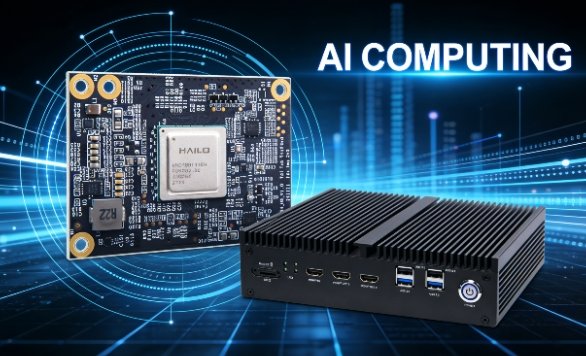
Artificial intelligence is undergoing a structural shift. Instead of being concentrated in cloud data centers, AI systems are increasingly deployed directly into physical environments where data is generated.
Factories, retail stores, transportation systems, and embedded devices are no longer passive data sources. They are becoming active intelligence nodes capable of local decision-making.
This transition is fundamentally changing how hardware is designed and deployed.
The Limitations of Traditional Embedded Development
Historically, embedded systems were designed as tightly coupled hardware-software solutions. Each product often required a custom-designed board tailored to its specific function.
While effective in stable environments, this approach struggles to scale in modern AI-driven applications.
The introduction of AI workloads has significantly increased system complexity. Devices must now support:
- Real-time inference processing
- High-bandwidth camera input
- Multi-protocol connectivity
- Edge analytics and decision-making
- Continuous operation under industrial conditions
Developing custom hardware for each of these scenarios is both time-consuming and expensive.
As product cycles shorten, this model becomes increasingly difficult to sustain.
System-on-Module Design Changes the Development Model
System-on-Module (SOM) platforms offer a structural solution to this problem.
Instead of designing a full computing platform from scratch, developers use a standardized computing module as the core of multiple product lines.
This modular approach separates hardware development from application development. Engineering teams can focus on product differentiation rather than low-level board design.
In practice, this significantly reduces development time, simplifies validation processes, and improves scalability across product families.
ARM Architecture Aligns Naturally with Edge AI Requirements
Most edge AI systems operate under constraints that differ significantly from traditional computing environments.
They must be compact, energy-efficient, thermally stable, and capable of continuous operation without active cooling in many cases.
ARM architecture is well suited to these requirements due to its efficiency-oriented design philosophy.
Unlike server-class systems that prioritize maximum compute density, ARM-based platforms optimize for balanced performance per watt.
This makes them particularly effective for distributed AI deployments, where many small devices collectively form a larger intelligent system.
The Shift Toward Distributed Intelligence
One of the most important trends in AI infrastructure is decentralization.
Instead of relying on a single centralized AI system, intelligence is increasingly distributed across multiple edge nodes.
This model reduces latency, improves resilience, and enables real-time decision-making closer to the data source.
ARM SOM platforms are becoming a foundational element of this distributed architecture because they provide a scalable and standardized way to deploy intelligence across large numbers of devices.
Industry Adoption Is Accelerating Across Multiple Segments
As demand for edge AI continues to grow, embedded computing vendors are rapidly expanding ARM-based product ecosystems.
Geniatech is actively developing ARM SOM platforms designed for industrial AI, smart HMI systems, and edge computing applications, supporting the transition toward distributed intelligence across industries.
This reflects a broader structural shift in the industry: computing is moving from centralized infrastructure toward modular, edge-native architectures.