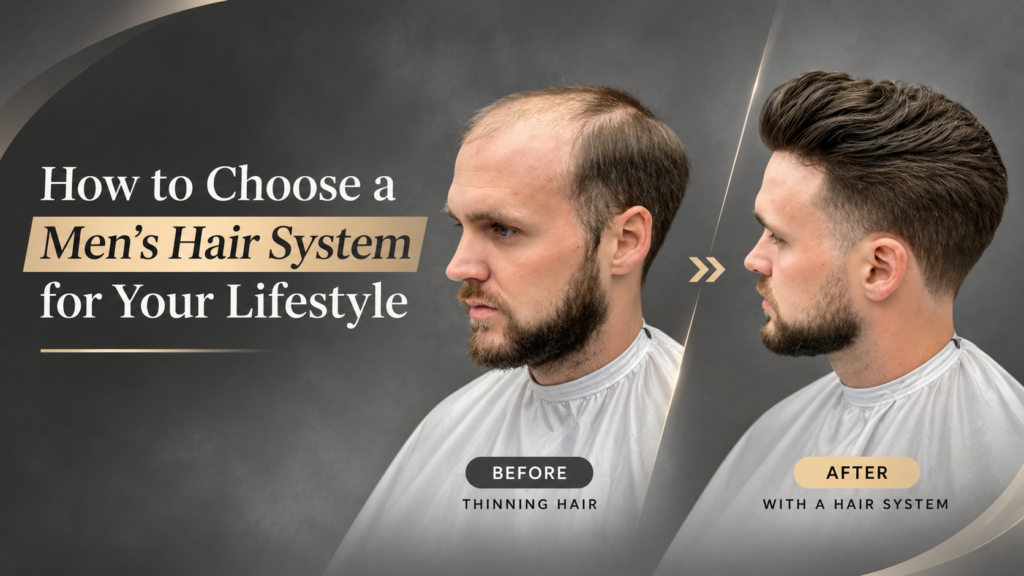
Choosing a men’s hair system isn’t just about finding a hairstyle that looks natural. It’s also about how that hairstyle fits into your everyday life. A system that works well for someone with a desk job and a predictable routine may not be the best choice for someone who spends hours at the gym or works outdoors.Hair systems come in different base materials, thicknesses, densities, and attachment options. Each design offers its own balance of appearance, comfort, durability, and maintenance. Understanding these differences can help you avoid choosing a system that looks great initially but becomes inconvenient after a few weeks.The right choice should make your daily routine easier, not more complicated.
Start With Your Daily Routine, Not Your Preferred Hairstyle
It’s tempting to begin by looking at hairstyle photos. You might want a sharp side part, a textured crop, or a full head of swept-back hair. However, your lifestyle should influence the type of hair system you choose before you settle on the final look.Think about how you spend a typical week. Do you exercise regularly? Are you often outdoors in hot weather? Do you travel frequently or prefer to spend as little time as possible on grooming?These details affect the practical requirements of your system. Someone who sweats heavily may place greater importance on ventilation and secure attachment, while a person who travels often might prefer a system with a relatively straightforward cleaning routine.You should also consider how comfortable you are with maintenance. Some wearers enjoy handling removal, cleaning, and reattachment themselves, while others prefer regular appointments with a hair replacement specialist.A realistic understanding of your habits will help narrow your choices.
Understand the Differences Between Lace, Skin, and Hybrid Bases
The base is one of the most important parts of a hair system because it influences how the product feels, looks, and performs.Three common options are lace, polyurethane skin, and hybrid constructions.
Lace Hair Systems
Lace bases are made from fine mesh materials that allow air and moisture to pass through. French lace is generally considered more robust, while Swiss lace is typically finer and more delicate.These characteristics make lace worth considering for people who prioritise ventilation, particularly in warmer environments.However, lace can require careful cleaning, and adhesive residue may become trapped in the mesh. Delicate lace also needs gentle handling during removal and maintenance.
Skin Hair Systems
Skin systems use a thin polyurethane base designed to sit against the scalp. Some ultra-thin versions can create a discreet front hairline, especially when paired with suitable hair attachment techniques.The smooth base surface may make certain cleaning tasks easier compared with lace. However, polyurethane is generally less breathable, and very thin versions may have a shorter useful lifespan.A thicker skin base may offer better durability, but the edge can become more noticeable depending on the hairstyle and installation.
Hybrid Hair Systems
Hybrid systems combine lace and polyurethane in different sections of the base.For example, a lace centre may provide ventilation, while polyurethane around the perimeter offers a smooth surface for certain attachment methods.This construction can appeal to people who want a balance between breathability, ease of maintenance, and practical attachment.There is no single base material that works best for everyone. The ideal choice depends on which features matter most in your routine.
Choose a Hair System That Matches Your Activity Level
Physical activity can influence how a hair system performs throughout the day.If you regularly run, cycle, lift weights, or play sports, you’ll need to think about perspiration, scalp comfort, and attachment security. A breathable lace construction may feel more comfortable for some active wearers, although the base material alone does not determine how securely the system stays in place.Attachment products, scalp preparation, skin sensitivity, and maintenance habits also matter.Swimming introduces additional considerations. Chlorine, salt water, and frequent wetting can affect hair condition and attachment performance. Anyone planning to swim regularly should discuss compatible adhesives and care methods with an experienced installer.For someone with a less physically demanding routine, the priorities may be different.An office worker who spends most of the day indoors might focus on a natural-looking hairline and a hairstyle that requires minimal morning preparation. Someone who frequently attends social events may want greater styling flexibility.Rather than choosing a system based on one activity, consider the combination of activities that make up your normal week.
Think About How Much Maintenance You’re Willing to Do
Every hair system requires ongoing care, but the amount of work varies depending on its construction and how it is worn.Maintenance typically involves cleaning the hair, managing tangles, checking the attachment, and periodically removing and reinstalling the system.The interval between full maintenance sessions can vary considerably. Skin type, perspiration, adhesive choice, environmental conditions, and personal preferences all influence how often attention is needed.Some wearers prefer shorter attachment periods because they find frequent cleaning more comfortable. Others use longer-wear attachment methods under appropriate conditions.The base material also affects the process.Lace may require extra care when removing adhesive from the mesh, while polyurethane can provide a smoother cleaning surface. Neither option eliminates the need for proper scalp hygiene.If you’re new to wearing hair systems, it’s worth learning the basic maintenance process before choosing a particular design. A system that requires techniques you’re not comfortable performing may become frustrating, even if you love its appearance.Be realistic about the time and expense involved. Replacement units, adhesives, cleaning products, and professional appointments can all contribute to the long-term cost.
Match Hair Density and Texture to Your Natural Appearance
A natural-looking result depends on more than the base material.Hair density, texture, colour, and direction all influence how convincingly a system blends with your existing hair.One common mistake is choosing a density that is much fuller than the hair around the sides and back of the head. Although thick hair may look attractive in product photographs, the contrast can make the finished hairstyle appear less natural.A lighter density may work better for someone with fine remaining hair or a mature hairline.Texture matters just as much.If your natural hair has a slight wave, selecting perfectly straight replacement hair may create a noticeable difference unless the entire hairstyle is carefully blended. Similarly, the direction in which the hair is ventilated into the base can affect how easily you achieve your preferred parting or swept-back style.Your age, face shape, and personal preferences can help guide these decisions, but there are no universal rules.The aim is to choose a hairstyle that looks believable and feels comfortable for you.
Consider Your Preferred Hairstyle Before Choosing the Hairline
The hairstyle you want to wear can influence which base construction is most suitable.A textured fringe may conceal much of the front hairline, making the appearance of the exposed edge less important.A slicked-back hairstyle, on the other hand, leaves the front hairline more visible. This can place greater emphasis on base thickness, hair attachment techniques, and the way the hairline is designed.A side part introduces another consideration: hair direction.If the system is manufactured with a particular ventilation pattern, changing the parting may be more difficult than expected.For someone who frequently switches between different hairstyles, a more flexible hair direction may be worth discussing with the supplier.The goal is to avoid choosing a system based solely on how it looks on a mannequin or in a single product photograph.Think about how you’ll actually style it on an ordinary morning.
Decide Whether a Stock or Custom Hair System Makes More Sense
Stock hair systems can be a practical starting point for people whose coverage needs and styling preferences fit standard specifications.They are typically produced in established base sizes, colours, densities, and constructions. Depending on the product, the base may be trimmed to match the area requiring coverage.Custom systems offer greater control over individual specifications.TopUnique provides customisation options that include base design, dimensions, hair density, colour, curl pattern, hair direction, and front hairline shape. These choices can be particularly useful when someone has an unusual coverage area or wants a specific hairstyle that is difficult to achieve with standard options.For example, a wearer with thinning concentrated around the crown may require a different base shape from someone experiencing more extensive frontal recession.Customisation can also help match the replacement hair to the wearer’s remaining hair.However, custom systems generally require more planning and may involve longer production times. Stock products may be more convenient when a replacement is needed quickly.Neither approach is automatically superior. The better choice depends on your coverage requirements, budget, and willingness to wait for a more individualised design.
Don’t Overlook Climate and Travel Habits
Your environment can affect how comfortable a hair system feels.In hot or humid weather, perspiration may increase the need for cleaning or attachment adjustments. A more breathable construction may be preferable for some wearers, although individual comfort varies.Cold and dry conditions introduce different concerns.Indoor heating, low humidity, and friction from hats or scarves can contribute to dryness and tangling, particularly with longer hairstyles.Travel also deserves consideration.If you frequently move between cities or countries, think about whether you can maintain your system without relying on a particular salon. Carrying compatible care products and having a predictable maintenance routine can make travelling less stressful.It’s also useful to have a backup plan if your usual attachment product becomes unavailable.A hairstyle that looks good is important, but a system you can confidently maintain while travelling offers a different kind of convenience.
Compare Long-Term Value, Not Just the Purchase Price
The initial price of a hair system tells only part of the story.A delicate, ultra-thin base may offer the appearance you want but require more frequent replacement. A more durable construction may last longer under comparable conditions, although its appearance and comfort characteristics can differ.The actual lifespan depends on the base, hair quality, attachment methods, maintenance, and how the wearer handles the system.It’s therefore difficult to predict replacement frequency from base thickness alone.When comparing options, consider the total cost of ownership.This includes the system itself, installation services, adhesive or tape, cleaning products, maintenance appointments, and eventual replacement.A less expensive system that needs frequent replacement may not be the most economical choice over a full year.Equally, paying more for a premium construction doesn’t guarantee that it will suit your lifestyle.The best value comes from finding a balance between appearance, comfort, maintenance, and realistic durability.
Make the Final Choice Based on Your Real Life
Choosing a men’s hair system becomes easier when you stop looking for one universally perfect product.A breathable lace base may suit someone who prioritises ventilation. A thin-skin construction may appeal to someone who wants a particular hairline appearance and a smooth cleaning surface. A hybrid design may offer a useful compromise between different priorities.Your activity level, climate, preferred hairstyle, maintenance habits, and budget should all influence the decision.If possible, speak with an experienced hair replacement professional about your scalp, coverage area, and attachment requirements before purchasing.Most importantly, choose a system that supports the way you want to live.A natural-looking hairstyle can improve your confidence in your appearance, but the right hair system should also feel manageable when you’re working, travelling, exercising, or simply going about your day.