Street Furniture Advertising: A Smart Way to Reach Consumers Where They Live and Travel
Consumers spend a significant portion of their day moving through cities—walking to work, waiting at bus stops, shopping in retail districts, dining at local restaurants, or commuting on public transportation. These everyday moments create valuable opportunities for brands to connect with potential customers outside traditional digital channels.
While online advertising remains an essential part of modern marketing, businesses are increasingly investing in out-of-home (OOH) media to extend their reach into the physical world. Among the many OOH formats available, street furniture advertising has become one of the most effective ways to engage audiences at eye level, where people naturally pause and spend time.
Industry data supports this shift. According to the Out of Home Advertising Association of America (OAAA), out-of-home advertising continues to strengthen integrated marketing campaigns by increasing brand awareness and reinforcing messages consumers later encounter online. As cities continue investing in digital infrastructure and smart public spaces, advertisers have more opportunities than ever to deliver relevant messages in high-traffic urban environments.
For businesses looking to connect with local audiences while complementing broader marketing efforts, investing in street furniture advertising services offers an effective way to increase visibility where consumers live, work, and travel every day.
What Is Street Furniture Advertising?
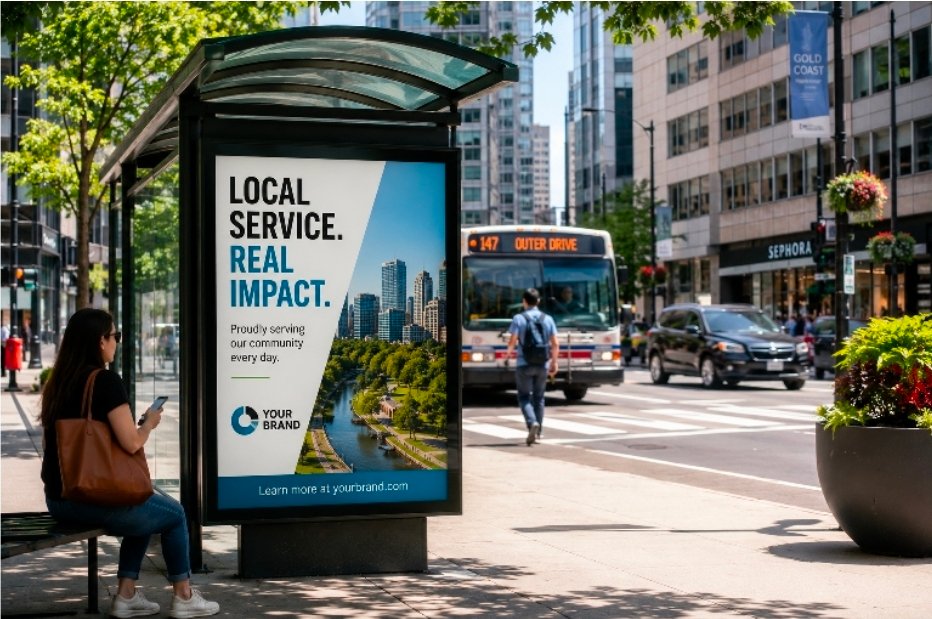
Street furniture advertising refers to promotional displays integrated into public infrastructure that people interact with throughout their daily routines.
Unlike traditional roadside billboards that are often viewed from a moving vehicle, these advertising formats are positioned closer to pedestrians and public transportation users, giving consumers more time to notice and absorb the message.
Common examples include:
- Bus shelters
- Transit benches
- Information kiosks
- Urban wayfinding displays
- Bicycle stations
- Newsstands
- Public seating areas
- Digital street displays
Because these structures are located where people naturally stop, wait, or walk, advertisements often receive longer viewing times than many traditional outdoor formats.
Instead of competing for attention during a brief drive-by, brands can engage consumers in moments when they are already observing their surroundings.
Why More Brands Are Investing in Street Furniture Advertising
Urban consumers follow predictable routines.
They wait for buses, walk through shopping districts, grab coffee before work, visit entertainment venues, and travel through commercial centers several times each week.
Street furniture advertising allows brands to become part of these everyday experiences.
Imagine a neighborhood café opening its newest location.
Instead of relying solely on social media advertisements, the business places advertisements on bus shelters located within a few blocks of the store. Morning commuters waiting for public transportation see the promotion every weekday, while nearby office workers notice the same advertisement during their lunch breaks.
Later that evening, those same people encounter the café again through Instagram or Google Search.
The repeated exposure creates familiarity, making consumers more likely to remember the business when deciding where to buy coffee the next morning.
This ability to reinforce messaging across both physical and digital channels is one reason street furniture advertising continues to grow in popularity.
Consistent Brand Visibility
Unlike advertising viewed from a moving vehicle, street furniture placements remain close to pedestrians, cyclists, and transit riders.
People waiting at a bus stop or crossing a busy intersection often have more time to notice advertising than drivers traveling on highways.
This repeated exposure helps strengthen brand recall throughout the week as consumers travel familiar routes.
For businesses focused on local awareness, consistency often matters more than a single large-format placement.
Highly Localized Targeting
One of the greatest strengths of street furniture advertising is precision.
Instead of broadcasting the same message across an entire metropolitan area, advertisers can focus on neighborhoods where their ideal customers are most likely to spend time.
For example:
- Retail stores can advertise near shopping districts.
- Restaurants can target nearby office workers during lunch hours.
- Healthcare providers can promote services close to medical centers.
- Universities can reach students around campus.
- Entertainment venues can advertise near stadiums and event districts.
This localized approach makes every advertising dollar work harder by reaching audiences where purchasing decisions are often made.
Longer Viewing Opportunities
Unlike highway billboards that are often seen for only a few seconds, many street furniture advertisements are viewed while people are standing still.
Someone waiting several minutes for a bus has far more time to notice a promotion, read a headline, or scan a QR code than someone driving past a roadside display.
This allows advertisers to communicate slightly more detailed messages while still maintaining clean, visually engaging creative.
However, simplicity remains important.
Strong headlines, compelling imagery, and one clear call to action typically perform better than overcrowded designs filled with excessive text.
How Street Furniture Advertising Supports Omnichannel Marketing
Today’s consumers rarely interact with a brand through a single channel before making a purchase. They may first notice an advertisement while commuting, search for the company online later that day, visit its website, and finally convert after seeing an email or social media promotion.
Street furniture advertising fits naturally into this customer journey by creating awareness in the physical world and reinforcing the messages consumers later encounter online.
For example, imagine a fitness studio launching a new membership campaign. A commuter sees the promotion on a bus shelter every morning for a week. Later, while scrolling through Instagram, they recognize the same branding in a sponsored post. That familiarity makes them more likely to click through, visit the website, and schedule a free trial.
Rather than operating independently, street furniture advertising strengthens other marketing channels by increasing brand recognition before consumers begin researching products or services.
Many successful campaigns integrate outdoor advertising with:
- Search engine marketing (SEM)
- Social media advertising
- Connected TV (CTV)
- Display advertising
- Email marketing
- Mobile advertising
- Public relations
- Local SEO
When messaging remains consistent across these channels, brands build greater trust and improve the likelihood of customer engagement.
Choosing the Right Locations
Even the most creative advertisement can underperform if it’s placed in the wrong location.
Successful street furniture campaigns begin with understanding where target audiences spend their time instead of simply choosing areas with the highest pedestrian traffic.
Before selecting placements, advertisers often evaluate:
- Pedestrian volume
- Public transportation usage
- Retail activity
- Office and business districts
- Entertainment venues
- Residential neighborhoods
- Population density
- Local demographics
- Nearby complementary businesses
For instance, a pediatric clinic may benefit from advertising near schools, family neighborhoods, and community centers, while a luxury fashion retailer may achieve stronger results around premium shopping districts and downtown business areas.
Matching locations to customer behavior helps maximize both campaign relevance and advertising spend.
Best Practices for Effective Street Furniture Advertising
Street furniture provides excellent visibility, but thoughtful creative execution is just as important as choosing the right location.
Here are several best practices that consistently improve campaign performance.
Keep the Message Clear
People should understand your advertisement within just a few seconds.
Focus on one key message supported by a concise headline and a clear call to action. Avoid cluttering the design with unnecessary information.
Use High-Quality Visuals
Strong imagery captures attention quickly.
Choose visuals that support your message without overwhelming it, and use readable typography with sufficient contrast so the advertisement remains clear in different lighting conditions.
Adapt Creative to the Environment
Different neighborhoods often require different messaging.
An advertisement near a financial district may emphasize convenience and professionalism, while creative placed near entertainment venues might use a more energetic and lifestyle-focused approach.
Considering the surrounding environment makes campaigns feel more relevant to the audience viewing them.
Maintain Brand Consistency
Consumers should instantly recognize your brand regardless of where they encounter it.
Using consistent logos, colors, messaging, and calls to action across outdoor advertising, websites, social media, and email campaigns strengthens recognition and reinforces trust over time.
Why Strategic Planning Matters
Successful outdoor advertising isn’t simply about finding available advertising space.
It involves developing a strategy that aligns placements, creative assets, budgets, and campaign objectives with the audiences businesses want to reach.
A structured planning process typically considers:
- Marketing objectives
- Audience behavior
- Geographic coverage
- Budget allocation
- Campaign duration
- Creative strategy
- Performance expectations
For example, a retailer launching a holiday promotion may schedule advertising several weeks before peak shopping periods, while an event organizer might concentrate placements closer to the event date to maximize awareness.
Strategic planning helps ensure campaigns deliver meaningful business outcomes instead of simply increasing exposure.
The Value of Independent OOH Expertise
Planning an outdoor advertising campaign often means evaluating inventory across multiple media owners, formats, and geographic markets.
Working with an independent OOH media partner gives businesses access to a broader range of opportunities instead of limiting recommendations to a single provider’s inventory.
Independent planning can help businesses:
- Compare advertising options across multiple vendors
- Optimize budgets based on campaign goals
- Identify premium placements
- Coordinate campaigns across several markets
- Simplify vendor management
- Receive objective recommendations focused on performance
This broader perspective helps advertisers make informed decisions while creating campaigns that better align with business objectives.
The Future of Urban Advertising
Urban advertising continues to evolve alongside advances in digital technology.
Many cities are expanding their use of smart infrastructure, digital street displays, and data-driven audience measurement, creating new opportunities for brands to deliver timely, relevant messages.
Programmatic buying, dynamic creative optimization, and location intelligence now allow advertisers to adjust campaigns based on factors such as time of day, weather conditions, local events, and pedestrian activity.
According to the Out of Home Advertising Association of America (OAAA), ongoing innovation in digital out-of-home technology is helping advertisers build more responsive and measurable campaigns while improving the consumer experience.
As these capabilities continue to grow, street furniture advertising will remain an important part of modern media strategies, especially for brands focused on local engagement.
Final Thoughts
Street furniture advertising offers brands a unique opportunity to connect with consumers during their everyday routines. Whether people are waiting for public transportation, walking through shopping districts, or spending time in busy commercial areas, these placements provide repeated exposure that supports long-term brand recognition.
The most successful campaigns combine thoughtful location selection, engaging creative, and integration with broader marketing efforts. When supported by a well-planned strategy, street furniture advertising can help businesses reach local audiences more effectively while complementing digital channels such as search, social media, and email marketing.
For organizations looking to expand their outdoor advertising presence, working with an experienced media planning partner can simplify campaign development and ensure every placement supports measurable business goals.
Connect OOH provides customized street furniture advertising solutions designed to help businesses reach audiences across key urban markets throughout the United States. To learn more about developing a tailored outdoor campaign, contact the Connect OOH team and explore the best advertising opportunities for your brand.