Whenever you wish to buy shilajit, one question that comes to your mind is whether it’s real or fake. With so many brands and claims, it’s easy to end up with fake or adulterated products. This blog explains practical shilajit tests, what the taste of shilajit should be like, red flags to avoid, and how to read quality reports, so you can protect your health and your money.
Why purity of shilajit matters
Shilajit is a powerful natural resin used in Ayurveda. But because it’s popular, low-quality or fake shilajit also exists in the market. The global supplements market is huge and growing, which makes quality control challenging. For example, industry estimates show the dietary supplements market is valued in the tens to hundreds of billions of dollars and is still expanding—meaning more products, more sellers, and more risk of poor quality slipping through.
There’s another reason to be careful: some herbal products have been found to contain heavy metals when made poorly or adulterated. That’s why verifying “Pure shilajit” is not just a marketing line—it’s a safety step.
What real shilajit looks, smells, and tastes like
Before any shilajit test, learn the basics of how authentic shilajit behaves. These sensory checks won’t prove purity alone, but they help you spot obvious fakes.
Appearance & texture
- Real resin is soft and tar-like at warm room temperature, and it becomes harder in the cold. It is sticky and can stretch a little when warm.
- Powders or hard “rocks” that don’t soften with warmth can be a warning sign (some brands sell purified, dried powder—check their process and lab report if it doesn’t behave like a resin).
Aroma
- Expect an earthy, slightly smoky, resinous smell. It should not smell like perfume, strong chemicals, or artificial flavors.
Taste of shilajit
- Authentic shilajit tastes bitter and slightly smoky/earthy. It should not taste sugary, fruity, or like added flavoring. If it’s sweet, it may be mixed with fillers or sweeteners.
Simple at-home shilajit tests
These easy tests help you know the authenticity of products. They are not a replacement for lab testing, but they can catch many fakes.
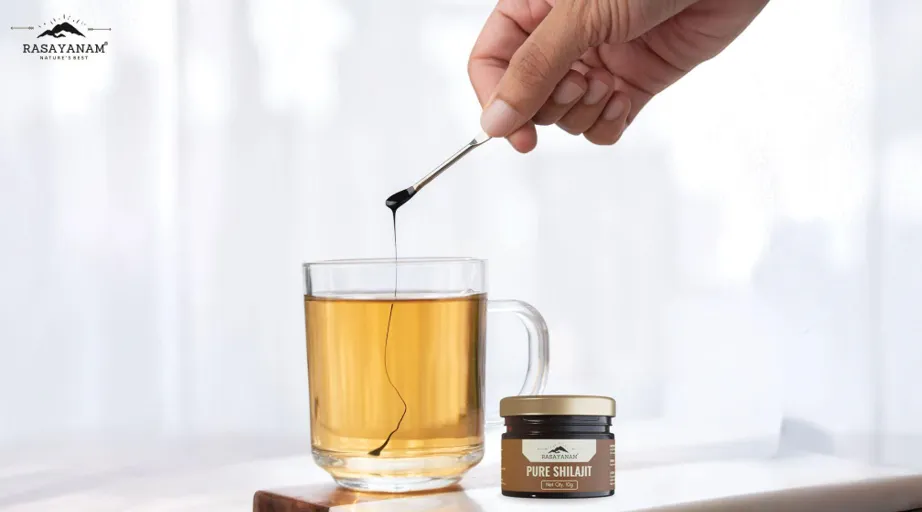
1) Warm-water dissolve test
- Drop a pea-sized amount into a glass of warm water.
- What you should see: Authentic shilajit dissolves completely, turning the water brown to a dark tea-like color. You may see fine natural particles, but there should be no sand-like grit or oil layer on top.
- Red flags: Clumps that won’t dissolve, floating oil, or sediment suggest fillers or poor processing.
2) Cold-temperature test
- Put a small piece in the fridge for 30–60 minutes.
- What you should see: Real resin hardens when cold and softens again when warmed in your fingers.
- Red flags: If it stays rubbery like plastic, or it doesn’t soften with warmth, be cautious.
3) Stretch & snap test (for resins)
- Warm a tiny piece between clean fingers and pull gently.
- What you should see: It should stretch a little, then break with a clean snap when pulled thin.
- Red flags: Crumbles like chalk or behaves like chewing gum.
4) Flame test (quick screening only)
- Hold a very small dried piece at the tip of a metal spoon and pass it briefly through a candle flame (do this with care, away from kids/pets, and avoid breathing any fumes).
- What you should see: Natural resin may soften, bubble, and give a natural resinous smell.
- Red flags: Strong plastic smell, bright green/odd flame colors suggest adulteration.
5) pH-in-water check
- Dissolve a small amount in a cup of water and dip a pH strip.
- Authentic shilajit solutions are typically mildly acidic.
- Red flags: Highly alkaline or no color change at all with suspect behavior in other tests.
Label and paperwork checks
Even if a product passes simple home checks, the best proof of purity is paperwork from an independent lab. Here’s what to look for:
Certificate of Analysis (COA) from a third-party lab
Ask for a recent COA for the exact batch you’re buying. It should list:
- Heavy metals: Lead, mercury, arsenic, and cadmium within safe limits.
- Microbial safety: Low counts for bacteria/yeast/mold; absence of pathogens.
- Pesticides/solvents: Especially if the product is solvent-extracted. Independent research has shown that some Ayurvedic products can contain heavy metals if not properly made, so this check is essential.
Manufacturing standards
Look for GMP/ISO certifications and clear details of purification steps. Reputable brands are transparent about sourcing and processing.
Sourcing transparency
Authentic shilajit usually comes from high-altitude mountain regions. While origin alone doesn’t guarantee quality, vague or changing origin stories are a red flag.
Additives
Check the ingredient list. “Pure shilajit” products should not include sugars, flavors, or synthetic fillers.
Common red flags of fake or poor-quality shilajit
- Ultra-cheap price for “premium” resin.
- Candy-like taste (sweet, vanilla, fruit).
- Glassy, rubbery, or plastic behavior under heat.
- No batch-specific COA or only a generic, old report.
- Gimmicky claims like “magic cure for everything” or unrealistic nutrient numbers.
When you should demand lab testing
Because the global market is large and fast-growing, weak oversight can allow bad products to take place in the market. WHO and other researchers estimate that about one in ten medical products worldwide, and even more in some regions, may be substandard or falsified. While shilajit is a supplement, the lesson is the same: always insist on quality proof. Heavy-metal checks are especially important for mineral-rich products like shilajit.
How to use and store shilajit to keep it pure
- Use clean, dry utensils each time.
- Store airtight away from heat and moisture.
- Don’t dip wet spoons; don’t touch the resin with dirty hands. Good storage keeps a pure product stable and safe.
Quick checklist before you buy
- Does the brand share a recent, batch-matched COA?
- Are heavy metals and microbes tested to safe limits?
- Does it dissolve cleanly in warm water at home?
- Does the taste of shilajit match bitter/earthy?
- Are pricing, origin, and claims realistic?
FAQs
1) What is the easiest home shilajit test?
The warm-water dissolve test. Real resin dissolves fully in warm water, turning it brown/tea-like without oily layers or gritty sand at the bottom.
2) What should the taste of shilajit be?
Bitter, earthy, and slightly smoky/resinous. Sweet or fruity flavors are a red flag unless the brand clearly labels added sweeteners (which pure shilajit should not have).
3) Does color prove the purity of shilajit?
No. Color can vary from dark brown to almost black. Focus on behavior (dissolving, softening with heat) and lab reports, not color alone.
4) Is powder shilajit fake?
Not always. Some brands dry purified resin into powder for convenience. Ask for the COA and run the dissolve test—good powder should still dissolve cleanly without grit or oil.
5) Can Rasayanam pure shilajit be a good option to consider?
With lots of brands available in the market, Rasayanam pure shilajit offers quality shilajit that is lab tested and verified. It depends on you to choose among different brands.