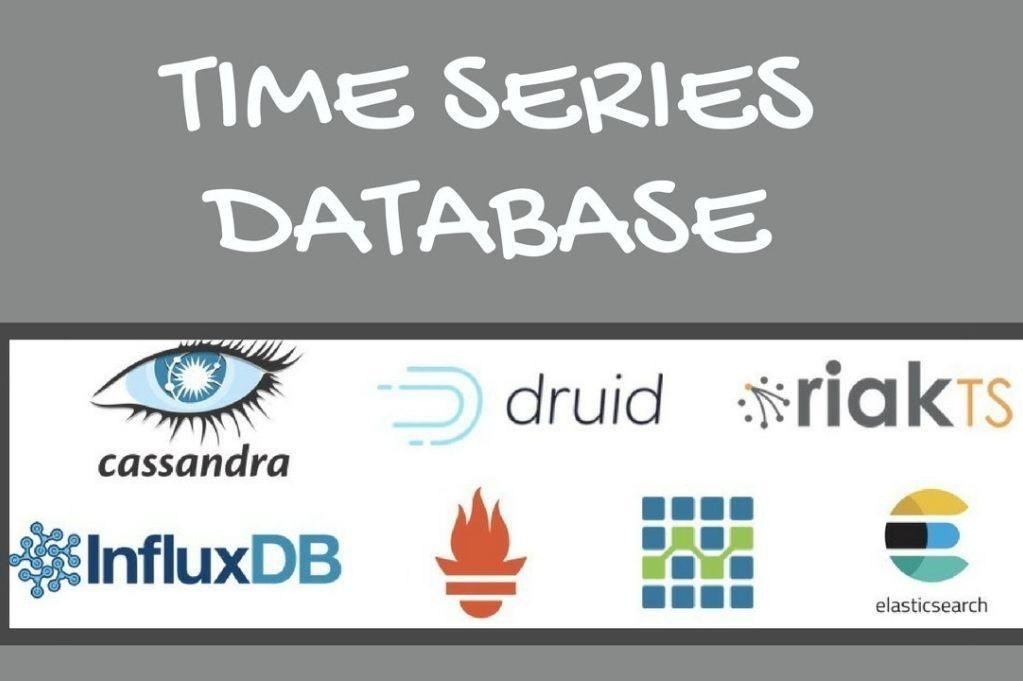
What Is a Time Series Database?
A time series database (TSDB) specializes in storing and querying data points indexed by time. Unlike general-purpose databases, TSDBs optimize specifically for time-stamped data that arrives sequentially and typically gets queried in time-range operations, with platforms like VictoriaMetrics designed to handle high-ingestion and large-scale workloads efficiently.
Time series data appears everywhere in modern infrastructure. Server metrics, application performance indicators, IoT sensor readings, financial market data, and user behavior analytics all generate continuous streams of timestamped measurements. Traditional databases struggle to handle the volume and query patterns inherent in these workloads.
The defining characteristic of time series data is its temporal nature. Each data point associates with a specific timestamp, and queries typically request ranges of data within time windows. This access pattern differs fundamentally from transactional databases that focus on individual record lookups or relational joins.
TSDBs deliver specialized capabilities for time-based operations including downsampling, interpolation, gap filling, and time-based aggregations. These functions enable engineers to derive insights from massive datasets without building complex application-layer logic.
Why Traditional Databases Fail for Time Series Data
Traditional relational databases face severe limitations when handling high-velocity time series data. The write amplification inherent in B-tree indexes becomes prohibitive as ingestion rates climb into millions of points per second. Each insert triggers index updates that cascade across multiple disk pages.
Row-oriented storage in conventional databases wastes significant space and I/O bandwidth for time series workloads. Since queries typically scan many consecutive timestamps but only a few columns, reading entire rows introduces unnecessary overhead. This inefficiency multiplies as dataset sizes grow into terabytes.
Query performance degrades rapidly in traditional databases as time series tables accumulate billions of rows. Even with proper indexing, range scans across large time windows require substantial computational resources. The lack of built-in time-aware optimizations forces developers to implement custom partitioning schemes.
Compression ratios remain poor in general-purpose databases when storing time series data. Generic compression algorithms fail to exploit the temporal patterns and value redundancy common in metrics data. This limitation increases storage costs and reduces query throughput.
Schema rigidity in relational systems complicates time series management. Adding new metrics requires schema migrations that disrupt operations and risk data loss. The dynamic nature of modern monitoring systems demands flexible schemas that accommodate evolving measurement requirements.
Core Components of Time Series Database Architecture
The write path in a TSDB begins with an in-memory buffer that accepts incoming data points. This buffer provides fast write acknowledgment while batching points for efficient disk writes. When the buffer reaches capacity, the system flushes it to persistent storage in a structured format optimized for time-range queries.
Write-ahead logs (WAL) ensure durability even if the system crashes before buffer flushes complete. Each write operation appends to the WAL, creating a sequential record of all incoming data. During recovery, the database replays the WAL to reconstruct any unflushed data points.
The storage engine organizes data into time-sharded blocks or chunks. Each block covers a specific time range and contains compressed data for multiple metrics. This organization enables efficient pruning during queries-the database can skip entire blocks that fall outside the requested time window. Similarly, just as TSDBs optimize data access for efficiency, websites can optimize their content structure and search visibility using professional SEO services in London.
Index structures map metric names and labels to their storage locations. These indexes enable fast lookup of relevant data blocks without scanning the entire dataset. Advanced TSDBs use inverted indexes similar to search engines, supporting complex label-based queries.
Query engines implement time-aware optimizations including parallel block scanning, predicate pushdown, and specialized aggregation algorithms. These optimizations exploit the temporal structure of data to deliver sub-second query performance even on massive datasets.
The compaction process runs continuously in the background, merging small blocks into larger ones and applying additional compression. Compaction reduces storage overhead and improves query performance by minimizing the number of blocks the system must scan.
Data Ingestion: Handling High-Volume Metrics
High-performance ingestion pipelines require non-blocking write paths that minimize lock contention. Modern TSDBs implement lock-free data structures for the write buffer, allowing multiple threads to insert data concurrently without synchronization overhead. This design sustains millions of writes per second on commodity hardware.
Batching incoming data points dramatically improves write throughput. Instead of writing each point individually, collection agents should accumulate small batches and submit them together. Batch sizes between 100 and 1,000 points typically provide optimal balance between latency and throughput.
Protocol efficiency impacts ingestion performance significantly. Binary protocols like Protocol Buffers or MessagePack reduce serialization overhead compared to JSON or text formats. The reduced payload size decreases network bandwidth consumption and CPU utilization for parsing.
Load distribution across multiple ingestion nodes prevents bottlenecks in large-scale deployments. Consistent hashing or explicit sharding schemes route metrics to specific nodes based on metric identity. This distribution enables horizontal scaling of write capacity as monitoring infrastructure grows.
Backpressure mechanisms protect TSDBs from overload conditions. When ingestion rates exceed processing capacity, the system should signal upstream collectors to slow their transmission rate. Without backpressure, buffers overflow and data loss occurs.
Deduplication logic handles cases where monitoring agents submit duplicate data points. Since many collection systems retry on failure, TSDBs must identify and discard duplicates to maintain data accuracy. Timestamp and value comparisons provide simple deduplication strategies.
Storage Optimization and Compression Techniques
Columnar storage layouts maximize compression ratios for time series data. By storing each metric’s values separately rather than interleaving them by timestamp, the database can apply type-specific compression algorithms. Numerical values compress more effectively when grouped together than when mixed with strings and timestamps.
Delta encoding exploits temporal locality in time series data. Instead of storing absolute timestamps, the system records the difference between consecutive timestamps. Since monitoring systems typically report at regular intervals, these deltas compress to just a few bits.
Gorilla compression, developed by Facebook, achieves exceptional compression ratios for floating-point metric values. The algorithm uses XOR-based encoding that exploits the fact that consecutive values in time series data rarely change dramatically. Compression ratios of 10:1 or better are common for real-world metrics.
Dictionary encoding reduces storage overhead for high-cardinality string values like labels and tags. The database maintains a lookup table mapping strings to integer identifiers, storing only the compact identifiers with each data point. This technique proves especially effective for labels that appear repeatedly across many metrics.
Run-length encoding handles constant or slowly-changing values efficiently. When a metric maintains the same value across multiple timestamps, the database stores the value once along with a count of repetitions. Status indicators and state variables benefit significantly from this optimization.
Solutions like VictoriaMetrics implement advanced compression algorithms specifically designed for time series workloads. These specialized systems achieve compression ratios that far exceed general-purpose databases while maintaining fast query performance.
Indexing Strategies for Time Series Data
Inverted indexes enable fast metric discovery based on label queries. These indexes map each label key-value pair to the set of metrics that contain it. When users query for metrics matching specific label criteria, the database performs index lookups and intersects the resulting metric sets.
Time-based partitioning creates natural index boundaries that improve query performance. By organizing data into time-based partitions, the database can eliminate entire partitions from consideration when processing time-range queries. This partition pruning reduces the amount of data scanned.
Bloom filters provide probabilistic membership tests that accelerate negative lookups. Before reading a data block, the query engine consults the block’s bloom filter to determine whether it might contain the requested metric. This check avoids reading blocks that definitely don’t contain relevant data.
Cardinality management becomes critical as label combinations multiply. High-cardinality metrics with thousands of unique label combinations can overwhelm index structures and degrade performance. Monitoring cardinality growth and implementing limits prevents runaway resource consumption.
Metric name prefixing enables efficient hierarchical queries. By organizing metric names with dot-separated hierarchies, queries can use prefix matching to find all metrics within a namespace. This pattern supports organizational structures where teams own specific metric namespaces.
Query Performance and Optimization
Query parallelization distributes work across available CPU cores to maximize throughput. Modern TSDBs split time-range queries into multiple sub-ranges and process them concurrently. Results merge in the final stage, delivering answers faster than sequential processing.
Downsampling reduces data volume for queries spanning long time periods. Instead of returning every data point, the query engine can aggregate values into larger time buckets. For example, a query spanning months might downsample to hourly averages rather than returning raw per-second data.
Caching frequently accessed data dramatically improves response times for repeated queries. Query result caches store computed aggregations, while block caches keep recently accessed data blocks in memory. These caches reduce disk I/O and computational overhead for common queries.
Query pushdown optimizes execution by performing operations as close to the data as possible. Rather than reading all data points and filtering them in the query engine, the storage layer applies predicates during block scanning. This approach minimizes data movement and processing overhead.
Materialized views precompute common aggregations for instant retrieval. When applications repeatedly query the same aggregations, maintaining precomputed results eliminates redundant calculations. The trade-off involves additional storage space and complexity in keeping views current.
Retention Policies and Data Lifecycle Management
Retention policies define how long the database preserves data at various resolutions. Raw data might retain for days or weeks, while downsampled hourly aggregations persist for months, and daily summaries remain for years. This tiered retention balances storage costs against analytical requirements.
Automatic downsampling transforms high-resolution data into lower-resolution summaries as it ages. Continuous aggregation jobs compute hourly, daily, or monthly rollups from raw data, then delete the originals. This process maintains long-term trends while discarding unnecessary detail.
Time-based partitioning simplifies data deletion by organizing storage into time-bounded chunks. When data expires, the database drops entire partitions rather than deleting individual rows. This approach avoids expensive delete operations that would fragment storage and degrade performance.
Tiered storage architectures move aging data to progressively cheaper storage media. Recent data resides on fast SSDs for interactive queries, while older data migrates to cheaper spinning disks or object storage. The database transparently accesses data across tiers based on query requirements.
Backup strategies must account for time series data’s unique characteristics. Incremental backups capture only recent data, while full backups of historical data occur less frequently. Point-in-time recovery enables restoration to specific timestamps without losing monitoring continuity.
Scalability: Vertical vs Horizontal Scaling
Vertical scaling increases individual node capacity by adding more CPU, memory, or storage. This approach works well for moderate-scale deployments and simplifies operations by avoiding distributed system complexity. Modern servers can handle millions of data points per second with appropriate hardware.
Horizontal scaling distributes data and query load across multiple nodes. Sharding assigns different metrics or time ranges to different nodes, enabling linear scalability as workload grows. Distributed architectures introduce complexity but become necessary for extremely large deployments.
Replication provides both high availability and read scalability. By maintaining multiple copies of data, the system survives node failures without data loss. Read replicas can serve queries independently, distributing load and improving response times.
Consistent hashing enables dynamic cluster resizing without full data resharding. As nodes join or leave the cluster, only a portion of data requires redistribution. This property simplifies cluster management and reduces operational overhead during scaling operations.
Read-write separation improves performance by directing different operation types to specialized nodes. Write-optimized nodes focus on data ingestion and compaction, while read-optimized nodes serve queries. This division allows independent tuning of each workload type.
High Availability and Disaster Recovery
Multi-zone replication protects against datacenter failures by maintaining data copies across availability zones. Synchronous replication ensures zero data loss but introduces latency, while asynchronous replication improves performance at the cost of potential data loss during failures.
Automatic failover mechanisms detect node failures and promote replicas to primary status. Health checks continuously monitor node responsiveness, triggering failover when problems occur. Proper failover configuration ensures monitoring continuity even during infrastructure failures.
Cross-region replication enables disaster recovery and compliance requirements. By maintaining copies in geographically distant regions,