PVC Ball Valve Fundamentals
The use of PVC ball valves is growing rapidly worldwide. In fact, the global market for ball valve PVC is expected to grow at a CAGR of 7.5% between 2025 and 2033.[1] This rise is caused by the need for easy-to-use valves in plumbing, irrigation, and industrial systems.
How They Work
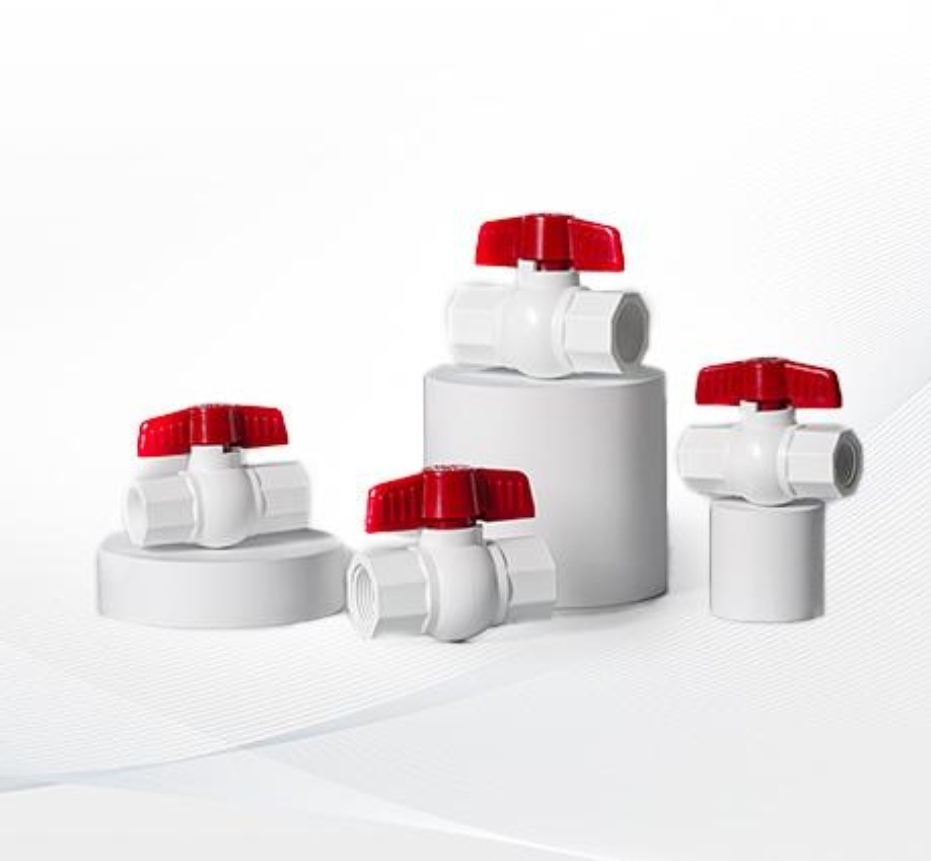
A PVC ball valve has a small round ball inside with a hole in the middle. Water or fluid can flow through the hole when it lines up with the pipe.
When you turn the handle, the ball turns too, and the hole moves out of line with the pipe. This stops the water from flowing. It works a lot like a tap. Because of this simple design, the valve is easy to use and does its job well in homes and small chemical systems.
Core Benefits in Applications
A ball valve PVC is helpful in many water systems. Here are some of the main benefits:
- Start and stop water easily: Just turn the handle to let water flow or stop it.
- Prevent leaks: When the valve is closed, water does not escape.
- Light and easy to handle: The valve is not heavy, making installation really simple.
- Lasts a long time: The plastic does not rust like metal, so it can be used for many years.
These advantages make PVC ball valves an excellent choice, as they help direct water flow exactly where you want it.
Key Selection Criteria
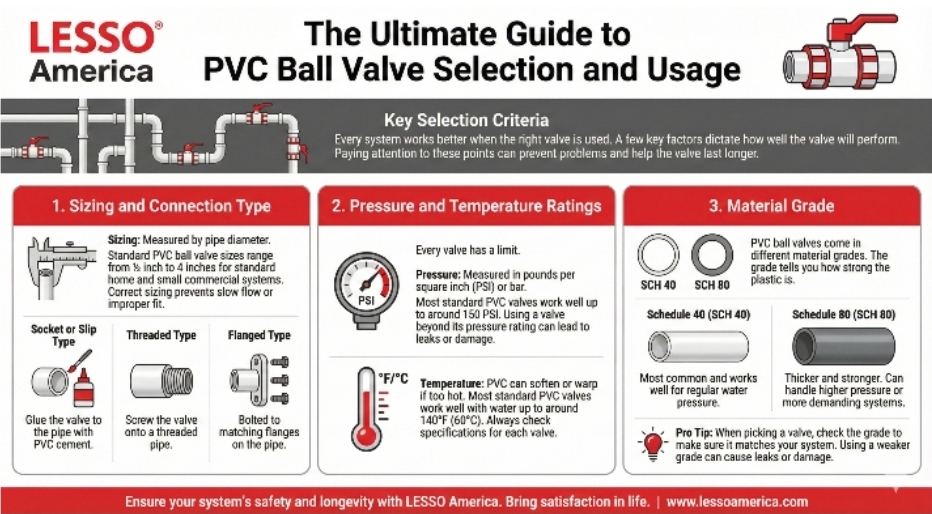
Every system works better when the right valve is used. A few key factors, such as size, the pressure it can handle, and the material, dictate how well the valve will perform. Paying attention to these points can prevent problems and help the valve last longer.
-
Sizing and Connection Type
The size of a valve is usually measured by the diameter of the pipe it fits. Standard sizes for PVC ball valves range from ½ inch to 4 inches for standard home and small commercial systems. Choosing the right size is important because a valve that is too small can slow down flow, while one that’s too big may not fit the piping properly.
Connection type tells you how the valve will join the pipe. There are three main types:
- Socket or Slip Type: You glue the valve to the pipe with PVC cement.
- Threaded Type: You screw the valve onto a threaded pipe.
- Flanged Type: The valve has flat ends that are bolted to matching flanges on the pipe.
-
Pressure and Temperature Ratings
Every valve has a limit for the pressure and temperature it can handle. Pressure of these valves is measured in pounds per square inch or bar. Using a valve beyond its pressure rating can lead to leaks or damage.
Temperature ratings are also important because PVC can soften or warp if it gets too hot. Most standard PVC valves work well with water up to around 140°F (60°C) and pressures up to 150 PSI, but you should always check the specifications for each valve.
-
Material Grade
PVC ball valves come in different material grades. The grade tells you how strong the plastic is and how much pressure or heat it can handle. Choosing the right grade is important so the valve does not break or leak.
The most common grades are:
- Schedule 40 (SCH 40): This is the most common and works well for regular water pressure.
- Schedule 80 (SCH 80): This is thicker and stronger. It can handle higher pressure or more demanding systems.
When picking a valve, check the grade to make sure it matches your system. Using a stronger grade than you need is fine, but using a weaker grade can cause leaks or damage.
Types of PVC Ball Valves
There are different designs and developments of ball valves to suit various needs. Some are basic and easy to use, while others are designed for more demanding systems.
-
Compact Ball Valves (The Basic Type)
Compact ball valves are the simplest of their type. A single body contains a turning ball that starts or stops the flow of water and other fluids. Compact ball valves normally come in one-piece and two-piece designs.
Applications include home water lines, small irrigation systems, and all other basic setups. They are easy to install, operate, and cost less than larger valves.
-
True Union Ball Valves (Premium Type)
True union ball valves consist of three parts:
- Two end pieces
- A central body
The ends can be unscrewed from the middle to remove the valve for cleaning, maintenance, or replacement without having to cut the pipes. They are much stronger, being able to withstand higher pressure and heavier usage.
These valves are used for larger plumbing systems or industrial setups where easy maintenance is needed.
-
Handle Types
Most PVC ball valves have lever handles that are easy to turn. Some valves have longer handles or special designs to reach tight spaces. If a handle breaks, PVC ball valve handle replacement is simple because the handle can be removed and replaced without special tools. This helps keep the valve working well for a long time.
LESSO America and Its PVC Fitting Solutions
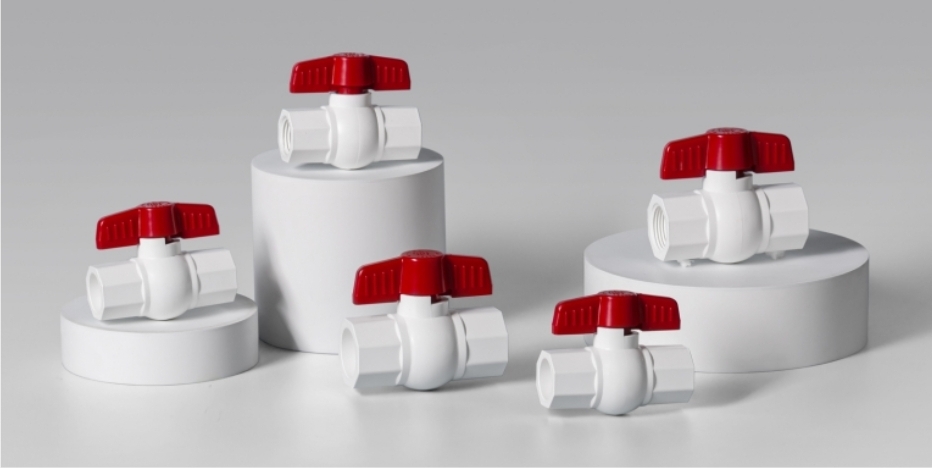
LESSO America is a trusted ball valve manufacturer that provides a complete range of PVC fittings. They offer high-quality PVC ball valves, PVC SCH 40 fittings, PVC SCH 80 fittings, and other pipe accessories.
Their products are strong, resistant to chemicals, and easy to install. Customers can also get replacement parts, which makes maintenance simple. LESSO America focuses on practical and reliable solutions. The valves and fittings last a long time and work well in homes, gardens, farms, or even larger systems.
Conclusion
PVC ball valves are perfect for liquid flow control. Selection of the right size, pressure, and material grade helps them perform well and last longer. LESSO America offers a complete line of tough PVC fittings, such as ball valves. Check out their products to find appropriate solutions for your system.
Rferences
[1] PVC Ball Valves 2025-2033 Trends: Unveiling Growth Opportunities and Competitor Dynamics. Available at: https://www.archivemarketresearch.com/reports/pvc-ball-valves-443135# (Accessed: March 4, 2026)