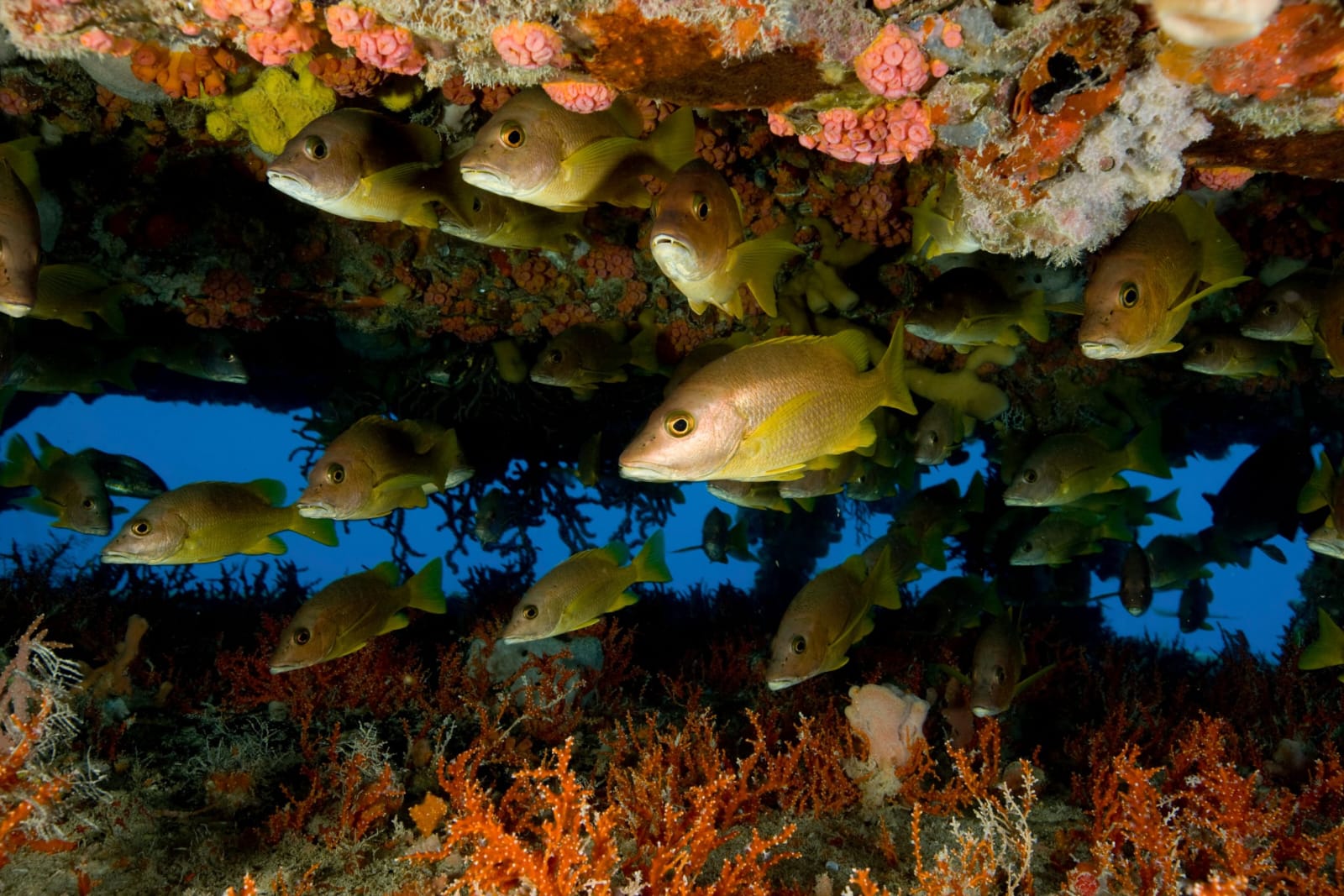
The marine life of Cyprus is one of the island’s quietest strengths. Many visitors arrive for sunshine, beaches and coastal resorts, but the waters around Cyprus offer far more than postcard scenery. Beneath the surface is a Mediterranean environment shaped by reefs, caves, seagrass habitats and a surprising variety of species. For swimmers, snorkellers and divers alike, Cyprus offers an underwater landscape that adds depth to any holiday, especially along the eastern and southern coasts where visibility and beach access are part of the appeal.
According to official Cyprus diving material, the Mediterranean is home to more than 18,000 recorded species, and Cyprus waters include colourful fish, sponges, coral, sea anemones, octopus, mussels and sea urchins. Protected species in Cypriot waters include green and loggerhead sea turtles, the pen shell Pinna nobilis and the highly endangered Mediterranean monk seal. The island is also associated with important underwater habitats such as Posidonia oceanica seagrass meadows, Cymodocea nodosa and forests of brown algae. That means Cyprus is not simply scenic at sea level; it is ecologically rich below it too.
Some of the best-known marine experiences in Cyprus are tied to specific dive locations. At Cape Pyla, for example, official tourism information describes rich marine life including sea stars, sea slugs, shells, soft sponges and corals. Elsewhere around the island, dive sites attract bream, grouper, moray eels, octopus and sea urchins, showing just how varied local underwater encounters can be. Even for non-divers, that diversity influences the wider coastal atmosphere: clearer waters, healthier ecosystems and more memorable time spent by the sea.
Cyprus also has a strong reputation for beach quality. Visit Cyprus reports that the island had 56 Blue Flag awards in 2025, covering 54 beaches and two marinas, while consistently ranking among the cleanest bathing waters in Europe. For travellers interested in marine life, that matters. Good water quality is not only pleasant for swimming; it also supports the kind of visibility and environmental confidence that make snorkelling, family beach days and shallow-water exploration more enjoyable.
There is also a contemporary conservation story to tell. Recent reporting from Cyprus highlights the ecological disruption caused by invasive species such as lionfish and silver-cheeked toadfish in the eastern Mediterranean. Lionfish, in particular, have become a growing challenge for native fish populations and local fishing communities. This reminds us that marine life is not static. Cyprus’s sea environment is beautiful, but it is also changing, and both local and European efforts are increasingly focused on protection, adaptation and sustainable management.
For travellers who want to experience this marine side of Cyprus while staying in comfort, Lordos Beach Hotel rooms provide a practical and attractive base in Larnaca. The hotel is set on a private beach in Larnaca Bay and offers rooms with balconies, side views of the Mediterranean and a range of categories suited to couples and families. That beachfront position makes it easy to begin the day with the sea in view and spend time in the water without lengthy travel.
The room selection also helps guests match the style of holiday they want. Couples may prefer a room with a sea-oriented outlook and balcony for a more relaxed coastal stay, while families can look at the Family Room or Junior Family Suite Side Sea View with Private Terrace. The Family Room accommodates two adults and two children, while the Junior Family Suite is designed for up to four guests and includes outdoor sitting space and access to a shared terrace garden. That combination of beach access and family-friendly accommodation works particularly well for holidays where the sea is central to the experience.
Marine life is not only for divers in Cyprus. Even casual visitors notice the difference the sea makes here. Clear water, rocky inlets, sandy shallows and sheltered beach areas all contribute to a coastal experience that feels alive. Children can begin noticing small fish in the shallows; adults can enjoy boat trips, swims and simple time by the shore with an added sense of connection to the environment. The beauty of Cyprus is that marine awareness can be built into an ordinary beach holiday without turning the trip into a specialist expedition.
That is one reason a stay at Lordos Beach makes sense in a marine-themed itinerary. You can spend the day discovering the coast, enjoying warm-weather swimming or planning excursions linked to Larnaca’s underwater attractions, then return to a hotel designed around relaxation. Whether you choose a room with a balcony and sea view or a family-focused layout with extra practicality, the setting supports the feeling that the Mediterranean is not just scenery, but part of the holiday itself. See the room options here.
The marine life of Cyprus gives the island another layer of meaning. It adds wonder to the coastline, encourages responsible tourism and offers travellers something more lasting than a beach photograph. From sea turtles and seagrass habitats to reef species and clean bathing waters, Cyprus rewards visitors who pay attention to what lies just under the surface. Stay close to the shore, choose the right hotel, and the sea becomes not only the backdrop to your trip, but one of its finest experiences.