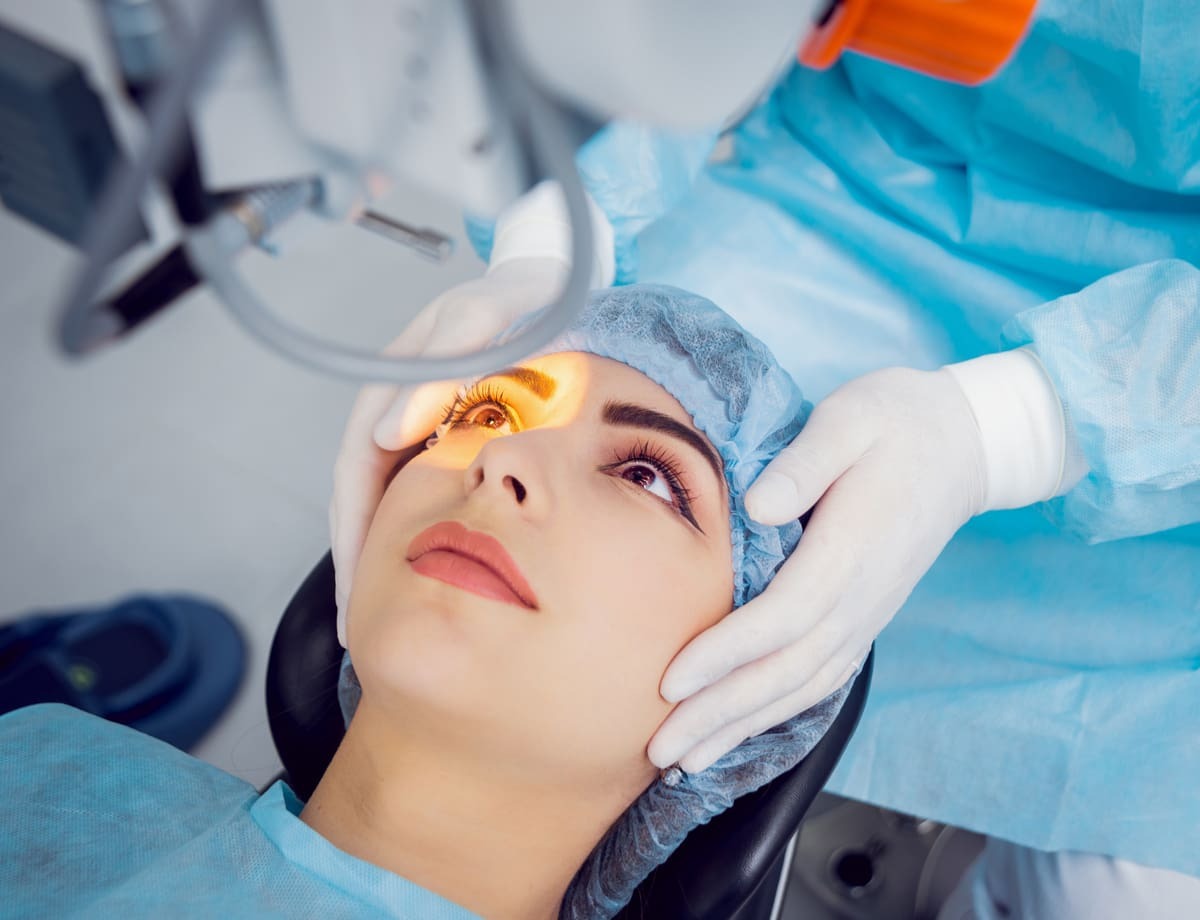
Making the decision to undergo laser eye surgery is a big step, one that comes with the promise of clearer vision, greater freedom, and a better quality of life. But knowing that laser correction works is only part of the picture. The real question for many is: which procedure is right for me?
Modern laser eye surgery isn’t one-size-fits-all. From LASIK and PRK to SMILE, each option offers unique advantages depending on your vision, eye health, lifestyle, and goals. The type of procedure you choose can directly influence not only how quickly you recover, but also how well you see long-term.
In this guide, we’ll walk you through what to consider when you’re
choosing the right laser eye procedure, so you can move forward with confidence.
Why Your Eyes Deserve a Personalised Approach
Your eyes are as unique as your fingerprint, and so are your visual needs. Some people need sharper distance vision for driving or sports, while others may struggle with reading or computer work. Conditions like corneal thickness (the clear outer layer of the eye), dry eyes, or previous infections also influence the best course of action.
That’s why the first step is always a detailed eye exam. Your surgeon will assess your corneal structure, pupil size, tear production, and prescription stability to determine what’s safe and effective for you.
The reassuring news is that laser eye surgery has come a long way since its inception. Today’s procedures are incredibly sophisticated, with advanced technology that can map your eye down to microscopic details. This means your surgeon can create a treatment plan that’s truly tailored to your unique visual fingerprint.
Understanding Your Vision Correction Options
Before we dive into specific procedures, it’s helpful to understand what all laser eye surgeries have in common. Essentially, they all work by reshaping your cornea, the clear, dome-shaped surface at the front of your eye. Think of your cornea as a window that light passes through to reach your retina (the light-sensitive tissue at the back of your eye). When this “window” isn’t perfectly shaped for your eye’s length, you end up with refractive errors like nearsightedness (myopia), farsightedness (hyperopia), or astigmatism (irregular corneal curvature).
The beauty of modern laser technology is its precision. These procedures can correct your vision by removing microscopic amounts of corneal tissue, sometimes less than the thickness of a human hair—to create the perfect optical surface for your eye. The result? Light focuses correctly on your retina, giving you clearer, sharper vision.
What’s particularly encouraging is the success rate of these procedures. Research shows that
99% of patients achieve better than 20/40 vision, and more than 90 percent achieve 20/20 or better. Even more impressive is the 96 percent patient satisfaction rate, the highest of any elective procedure.
The Three Most Common Laser Procedures
Now, let’s explore the three main laser eye surgery options available today. Each has its own approach to corneal reshaping, and understanding these differences will help you make an informed decision about which might be best for your situation.
These procedures, LASIK, PRK, and SMILE, represent decades of innovation in vision correction. While they all achieve similar results in terms of visual improvement, the techniques they use are quite different. Some create a temporary flap in your cornea, others work on the surface, and the newest option removes tissue from within the cornea itself. Let’s look at each in detail to help you understand which approach might suit your eyes and lifestyle best.
LASIK (Laser-Assisted In Situ Keratomileusis)
LASIK is probably the procedure you’ve heard most about, and for good reason, it’s been helping people see clearly for over 25 years. The process involves creating a thin flap on the cornea (the transparent front surface of the eye), which is then gently lifted so a laser can reshape the underlying tissue. Once the reshaping is complete, the flap is carefully placed back into position, where it heals naturally without the need for stitches.
- Who it’s for: People with stable prescriptions and healthy corneas. LASIK works well for most types of refractive errors, including nearsightedness, farsightedness, and astigmatism.
- Recovery: Usually within 24 to 48 hours, you’ll notice significant improvement in your vision. Most people can return to work and normal activities within a day or two.
- What makes it special: The quick recovery time is LASIK’s biggest advantage. Many patients are amazed that they can see clearly the very next day. The procedure itself takes only about 10-15 minutes per eye, and because the deeper layers of your cornea remain untouched, healing is typically comfortable and fast.
Note: Not suitable for those with very thin corneas or severe dry eyes. The flap creation requires a certain amount of corneal thickness to ensure safety.
PRK (Photorefractive Keratectomy)
PRK is actually the grandfather of laser eye surgery—it was the first laser vision correction procedure developed, and it’s still an excellent option for many people today. Instead of creating a flap like LASIK, PRK works on the surface of your cornea. The thin outer layer (epithelium) is gently removed, then the laser reshapes the underlying corneal tissue. Your epithelium naturally regenerates over the following few days.
- Who it’s for: Patients with thin corneas, surface irregularities, or those whose lifestyle or profession makes having a corneal flap inadvisable. PRK is often recommended for people in the military or those who play contact sports.
- Recovery: Takes a few days longer than LASIK—typically 3-5 days for the surface to heal, with vision continuing to improve over several weeks. While the recovery is longer, the final results are equally effective as LASIK.
- What makes it special: PRK is incredibly safe because it doesn’t involve creating a flap. This eliminates any flap-related complications and makes it suitable for people who might not qualify for LASIK due to thin corneas or other structural considerations.
Note: May cause more discomfort in the early healing phase, as the surface of your eye needs time to regenerate. However, this discomfort is manageable with proper care and typically resolves within a few days.
SMILE (Small Incision Lenticule Extraction)
SMILE is the newest addition to the laser eye surgery family, and it represents a significant leap forward in surgical technique. Instead of creating a flap or working on the surface, SMILE works entirely within your cornea. The laser creates a tiny disc of tissue (called a lenticule) deep within the cornea, which is then removed through a small incision, about 2-4 millimeters long. This removes exactly the right amount of tissue needed to correct your vision.
- Who it’s for: Often used for higher levels of short-sightedness (myopia) and people prone to dry eyes. SMILE is particularly good for those who want the benefits of laser correction but are concerned about potential dry eye symptoms.
- Recovery: Fast and flap-free. Most people experience quick visual recovery, typically within a few days, though it may take slightly longer than LASIK for vision to fully stabilize.
- What makes it special: The minimally invasive approach means fewer nerves are affected, which can result in less dry eye symptoms after surgery. SMILE has been conducted over 3 million times with a high success and patient satisfaction rate.
Note: Not yet available for all types of prescriptions. Currently, SMILE is primarily used for nearsightedness and mild astigmatism, though the technology continues to expand.
What Influences Your Best Option
Choosing between these procedures isn’t just about preference, several factors specific to your eyes and lifestyle will guide your surgeon’s recommendation. Understanding these factors can help you have more meaningful discussions during your consultation.
- Corneal Thickness – Your cornea needs to maintain a certain thickness after surgery to remain structurally sound. LASIK requires more tissue removal and flap creation, so if your corneas are naturally thin, SMILE or PRK may be safer options that still deliver excellent results.
- Dry Eye History – If you already experience dry eyes, this is an important consideration. SMILE tends to cause fewer dry eye symptoms than LASIK because it preserves more of the corneal nerve fibers that help regulate tear production. PRK can also be a good option for those with existing dry eye issues.
- Prescription Stability – Your vision prescription should be stable for at least 12 months before surgery. If you’ve had recent changes in your glasses or contact lens prescription, your surgeon will likely recommend waiting until your vision stabilizes. This ensures your results will be long-lasting.
- Occupation & Lifestyle – Your daily activities play a crucial role in determining the best procedure. If you play contact sports, work in dusty or harsh environments, or have a profession that puts you at risk for eye trauma, PRK or SMILE may be preferred over LASIK. Without a flap to potentially displace, these procedures offer more structural stability for active lifestyles.
- Age & Long-Term Needs – If you’re approaching your 40s, your surgeon will discuss presbyopia (age-related difficulty with near vision). While laser surgery primarily corrects distance vision, there are techniques that can help with both distance and near vision, or your surgeon might recommend preserving your distance vision and using reading glasses when needed.
- Healing Patterns – Some people heal faster than others, and some are more sensitive to discomfort. If you need to return to work quickly or have a low tolerance for temporary vision fluctuations, LASIK might be preferred. If you’re comfortable with a slightly longer recovery in exchange for the structural benefits of no flap, PRK or SMILE could be ideal.
Making Sense of Success Rates and Recovery
One question many patients ask is: “How do I know these procedures really work?” The statistics are genuinely encouraging. About
70% of PRK patients achieve up to 20/20 vision, and 92% achieve at least 20/40, which means they can pass a driving test without glasses. For LASIK, the numbers are similarly impressive, with most patients achieving excellent visual outcomes.
What’s equally important to understand is that success isn’t just about achieving perfect vision, it’s about achieving the vision that’s right for your lifestyle and goals. Some people are thrilled to be glasses-free for distance activities even if they need reading glasses for close work. Others prioritize being able to read without glasses, even if they occasionally need distance correction.
The key is having realistic expectations and open communication with your surgeon about what matters most to you in your daily life.
Additional Factors Worth Considering
- Enhancement Procedures – Sometimes, a touch-up procedure (called an enhancement) may be needed months or years after your initial surgery. Overall reoperation rates for SMILE, PRK, and LASIK patients were respectively 0.3%, 1.1%, and 1.2%. These low rates show that most people achieve their desired vision with just one procedure, but it’s good to know that adjustments are possible if needed.
- Cost Considerations – While cost shouldn’t be the primary factor in choosing a procedure, it’s worth understanding that prices can vary between techniques. More importantly, consider the long-term value, the money you’ll save on glasses, contact lenses, and related supplies often adds up to significant savings over time.
- Technology Advances – Laser eye surgery technology continues to improve. Custom treatments that map the unique imperfections of your eye (called wavefront-guided or topography-guided treatments) can provide even more precise corrections. Ask your surgeon about the technology they use and how it might benefit your specific situation.
- Seasonal Timing – Some people find certain times of year better for surgery. Spring and fall often provide more comfortable recovery conditions, not too hot, not too cold, and fewer allergens in the air that might irritate healing eyes.
Questions to Ask During Consultation
Your consultation is your opportunity to gather all the information you need to make a confident decision. Don’t hesitate to ask detailed questions, a good surgeon will welcome your curiosity and take time to address your concerns thoroughly.
- What procedures am I eligible for based on my eye exam?
- What are the specific risks and benefits of each option for someone with my lifestyle and eye characteristics?
- What experience do you have with each procedure, and how many have you performed?
- Will I need enhancements or repeat procedures later, and are these included in my initial cost?
- What will my recovery look like day by day, and when can I return to specific activities?
- How will you monitor my healing, and what signs should I watch for?
- What happens if I’m not satisfied with my results?
- Can you show me before-and-after photos of patients with similar prescriptions to mine?
Looking Beyond Surgery Day
It’s natural to focus on the surgery itself, but the relationship with your surgeon and clinic extends well beyond the procedure. Quality aftercare is crucial for optimal results and your peace of mind. Look for a clinic that provides comprehensive follow-up care, clear instructions for recovery, and easy access to your surgical team if you have concerns during healing.
Many patients find the emotional aspect of laser eye surgery just as significant as the physical changes. The freedom from glasses and contacts can be genuinely life-changing, from swimming without worrying about losing contacts, to waking up and seeing the alarm clock clearly, to enjoying sports without glasses slipping or fogging up.
Final Thoughts
Choosing the right laser eye surgery procedure starts with asking the right questions and trusting a clinic that prioritises tailored care. Your eyes deserve a personalised approach, not just for safety, but to make sure your results last. With today’s advanced techniques and high satisfaction rates, taking that next step toward better vision is more achievable than ever.
Remember, this decision doesn’t have to be rushed. Take your time to learn about your options, meet with qualified surgeons, and consider how each procedure aligns with your lifestyle and goals. The best choice is the one that gives you confidence in both the process and the expected outcome.
If you’re considering surgery, take your time to learn, ask, and weigh your options. Because when it comes to something as personal as your vision, making the right choice from the beginning is the clearest path forward.
Disclaimer: This article is for informational purposes only. Always consult with a qualified
eye care professional to determine the best procedure for your individual needs and circumstances.