In hospitality design, flooring is more than a surface to walk on, it is a sensory and emotional anchor for the entire guest experience. The moment a traveler steps into a hotel, flooring begins communicating brand identity, comfort, cleanliness, and quality. Long before a guest interacts with staff or explores amenities, the materials beneath their feet are shaping impressions in ways that can be subtle yet powerful.
Flooring carries a unique responsibility in hospitality because it intersects aesthetics, durability, acoustics, and maintenance. Hotel environments demand materials that perform consistently under high foot traffic while maintaining a visual language that matches the design narrative of the space. From the grand gesture of the lobby to the intimate quiet of a guestroom, the right flooring solution supports both function and atmosphere.
The Lobby: Defining Identity and Durability
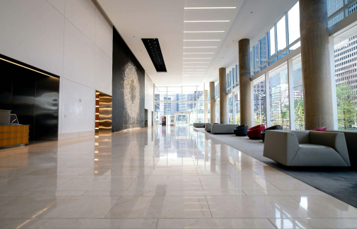
The lobby is often the most public and hard-used flooring zone in a hotel. It must balance durability with an aesthetic punch and often serve as the unifying plane that binds architectural form and interior styling. This is where natural stone, large-format porcelain, terrazzo, and polished concrete thrive.
Stone flooring remains a symbol of hospitality luxury for good reason. Materials such as marble and granite offer timeless elegance while withstanding decades of wear. However, advancements in porcelain technologies have made high-performance tiles that mimic stone, wood, or concrete compelling alternatives. Porcelain resists staining, scratches, and weather-related expansion, especially valuable in resorts where guests enter with sand, water, or sports equipment.
Terrazzo, with its speckled composite beauty, is one of contemporary favorites. Designers use it to introduce color, narrative, and movement into the lobby floor. Hotels increasingly commission custom blends that echo regional landscapes or brand palettes. Polished concrete is another strong contender for modern, minimalist spaces, offering resilience and the ability to integrate radiant heating systems. It can be stained or patterned, providing subtle visual interest without distracting from furniture or architectural gestures.
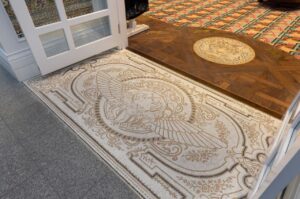
This is also a space where flooring can serve as a work of art. Some hotels integrate decorative stonework or patterns, such as compass mosaic artworks, installing a memorable visual anchor that guests associate with the property’s identity. Such elements turn the lobby into a storytelling device, something that communicates place and culture before a single word is spoken.
Corridors: Managing Acoustics and Wear
Hotel corridors are transitional spaces, but their importance is often underestimated. These can be the longest stretches of flooring in a property, and they endure constant foot traffic from guests rolling luggage, housekeeping staff, and service carts. As a result, acoustics become just as crucial as durability.
Carpet, particularly solution-dyed nylon carpet tile or broadloom, continues to dominate in corridors because of its sound-absorbing properties. It softens footfall, reduces echo, and creates a sense of privacy even when a hallway is busy. Advances in carpet tile technology now allow for intricate patterns, layered textures, and gradients that help conceal stains and normal wear. Designers often use moody, woven visuals or abstract forms inspired by regional motifs to enrich the walking experience without overwhelming the senses.
Luxury vinyl tile (LVT) and luxury vinyl plank (LVP) have also been making inroads as corridor flooring. They replicate wood, stone, or abstract patterns and provide exceptional durability at a lower cost. However, because vinyl is harder underfoot, acoustic underlayments are essential to ensure noise control meets hospitality standards. Many brands now engineer vinyl systems specifically for hotel corridors, integrating padding and sound-reduction layers that approach carpet-level quietness.
Lighting plays a key role here as well. Flooring must absorb illumination in a way that prevents glare and maintains safety. Corridors also serve as a canvas for wayfinding, enabling subtle transitions in pattern or texture to signal room clusters, amenities, or floor changes. Designers must think holistically: color value, material reflectance, and visual rhythm matter as much as the material itself.
Guest Rooms: Comfort Meets Cleanliness
Within the guest room, flooring requirements shift dramatically. This is the most intimate space in a hotel, where comfort and cleanliness are top priorities for guests. Designers frequently blend materials to create zones: soft surfaces for rest areas, harder surfaces for entry vestibules, vanities, or beverage stations.
Carpet remains common in guestrooms but has evolved significantly from the plush wall-to-wall designs of decades past. Contemporary hotels often choose low-pile, tight-loop carpets that are easier to clean and maintain while still offering warmth and acoustic softness. These carpets embed patterns that disguise vacuum marks and wear paths, contributing to a fresh and welcoming environment even after years of use.
Increasingly, hotels are turning to hard flooring for guestrooms, particularly LVT, engineered wood, or even cork. The pandemic’s influence on perceptions of hygiene accelerated this trend. Hard flooring appears cleaner to guests, reduces allergen concerns, and allows housekeeping teams to maintain strict sanitation protocols efficiently. Meanwhile, area rugs or modular rug tiles introduce comfort and can be replaced individually if damaged or stained.
Engineered wood brings a residential feel that elevates the guest experience, but designers must carefully assess moisture resistance and maintenance abilities, particularly in beachside or humid climates. LVT replicates the wood look without the vulnerabilities, offering strong durability and a cleaner profile. Some hotels pair LVT with acoustic underlayment to ensure footfall noise does not travel between floors or disturb neighboring rooms.
Restaurants and Bars: Style With Performance
Dining areas challenge flooring in unique ways: spills, stains, scent absorption, moving furniture, and intense foot traffic all come into play. This makes them ideal for materials with strong surface performance and design flexibility.
Porcelain tile excels here for its durability, stain resistance, and ability to mimic nearly any material. Designers can create a cohesive aesthetic: wood, marble, cement, or even metallic finishes, without the maintenance complications of the real materials. To soften the acoustics in large dining rooms, flooring is often combined with extensive ceiling treatments or strategic rug placement.
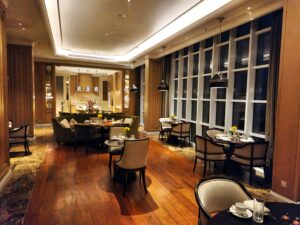
In upscale or boutique hotels, hardwood flooring continues to be a popular choice for bars and lounges because of its warmth and visual sophistication. Engineered hardwood, with its stable core layers, ensures resistance to humidity changes and reduces the risk of warping. However, proper upkeep is essential: regular refinishing schedules, protective glides for furniture legs, and area rugs in high-impact zones keep the floor performing well over time.
For more adventurous or thematic spaces, designers sometimes incorporate mosaic flooring to create dynamic patterns that reflect the restaurant’s cultural narrative or culinary inspiration. This introduces a crafted sensibility, allowing the floor to act as a backdrop, or sometimes a foreground, of the dining experience.
Ballrooms and Event Spaces: Flexibility and Strength
Ballrooms and multifunction event halls are some of the most demanding areas in a hotel. These spaces must shift from conferences to weddings to exhibitions, supporting large numbers of guests, heavy equipment, and constant reconfiguration of furniture. They also need to look sophisticated in photos and videos, especially during special events.
Carpet is traditionally the go-to solution because of its acoustic performance and visual richness. Patterns are designed to be bold enough to hide stains and indentations yet refined enough to give the event a sense of formality. Solution-dyed fibers ensure longevity, and hospitality-grade carpet backings offer dimensional stability for large expanses.
However, some new-build hotels and convention centers favor modular carpet tile instead of broadloom. This gives operations teams the flexibility to replace only the sections that have worn or become stained, lowering lifecycle costs.
Hard surfaces are less common in large ballrooms, but when selected, they must prioritize acoustics. Engineered wood or specialty vinyl systems with integrated sound-control layers can work in smaller venues or multifunction rooms, especially when combined with extensive drapery or acoustic wall panels.
Spa and Wellness Areas: The Need for Warmth and Water Resistance
Spa environments prioritise serenity, comfort, and hygiene. Flooring must withstand moisture, cleaning solutions, and shifts in temperature, all while contributing to a calm aesthetic.
Porcelain tile is a strong performer in wet areas such as saunas, steam rooms, and treatment areas. Non-slip finishes are essential for safety, particularly near pools or shower zones. Designers often choose textures inspired by nature: stone, sand, wood, or mineral surfaces, to support the wellness narrative.
Outside the wettest zones, luxury vinyl and engineered wood can introduce warmth while maintaining water resistance. Cork flooring has also become popular in treatment rooms because of its softness underfoot and natural antimicrobial properties. Its muted acoustic profile enhances the sense of tranquility.
Because spas operate under strict cleanliness standards, flooring must be easy to sanitize and resistant to chemical cleaners. Seamless surfaces or tight grout lines ensure that dirt does not accumulate in crevices, supporting long-term maintenance and hygiene.
Outdoor Spaces: Weather, Texture, and Guest Flow
Hotels increasingly invest in outdoor social areas: rooftop lounges, pool decks, courtyards, and walkways. These spaces require flooring materials that are weather-resistant, slip-resistant, and able to withstand UV exposure without rapid fading.
Porcelain pavers offer exceptional performance outdoors, resisting moisture and temperature changes while maintaining visual consistency with indoor areas for a seamless aesthetic transition. Concrete, either poured or in paver form, provides durability and flexibility, allowing designers to imprint patterns or integrate decorative aggregates.
Around pools, slip resistance is paramount. Textured stone, matte-finish porcelain, and specialty rubberized flooring systems help prevent accidents while keeping surfaces cool under sunlight. Hotels in tropical climates must pay particular attention to materials that won’t become slippery when wet or discolored in strong sun.
Wood decking brings natural warmth but requires significant maintenance, especially in coastal or humid environments. Composite decking solutions offer the look of wood with improved durability, reducing splintering, warping, and maintenance demands.
Sustainability and Lifecycle Thinking
Sustainable flooring is no longer a niche concern in hospitality, it is a priority for both developers and guests. Environmental certifications such as LEED and WELL have pushed flooring manufacturers to innovate with recycled content, low-VOC materials, and biodegradable components.
Carpet manufacturers have developed take-back programs to recycle old carpet tiles. Porcelain suppliers now use waste materials and energy-efficient kilns. Wood flooring increasingly comes from responsibly managed forests or reclaimed sources. Even concrete and terrazzo can incorporate recycled glass or industrial waste to reduce environmental impact.
Beyond material sourcing, lifecycle analysis is crucial. Hotels must weigh not just the upfront cost of flooring but the long-term expenses of maintenance, cleaning, refinishing, and replacement. A durable material that performs for decades may ultimately be more sustainable than a cheaper option that wears out quickly.
Design Cohesion and the Guest Experience
The best hotels view flooring not as separate components within different areas but as part of a cohesive design journey. Materials may shift from hard to soft, warm to cool, patterned to minimal, but each transition supports the narrative arc of the guest experience.
Flooring subtly guides guests through spaces, communicating hierarchy and mood. A shift in texture can signal a change from public to private. A bold lobby pattern can create a sense of arrival. A quiet, muted guestroom floor can promote rest. In health and wellness areas, natural materials deepen relaxation. Outdoors, rugged textures increase safety and connection to nature.