Think about it: how many times have you tossed a plastic wrapper into the bin without a second thought? Now, multiply that by billions of people across the globe, and that’s the amount of waste created. As per studies, UK households discard staggering 90 billion plastic packaging per year, mostly it is food and drink packaging.
People have realized the side effects of this mounting waste – overflowing landfills, polluted oceans, and microplastics entering the food chain. This is causing the consumers and food businesses to rethink food packaging and move to eco-friendly and smart packaging alternatives.
For food businesses, the packaging should be practical, functional, and visibly responsible without increasing the cost or overpromising on environmental costs. Let’s understand some food packaging alternatives that you can introduce in your workflows.
Packaging Innovations that You opt For
Traditional food packaging options are cheap and effective, but are they good for the environment and your customers’ health? Probably not. However, there are smarter and budget-friendly alternatives that you can use to replace the plastic packaging in your business operations:
- Plant-based Packaging Material
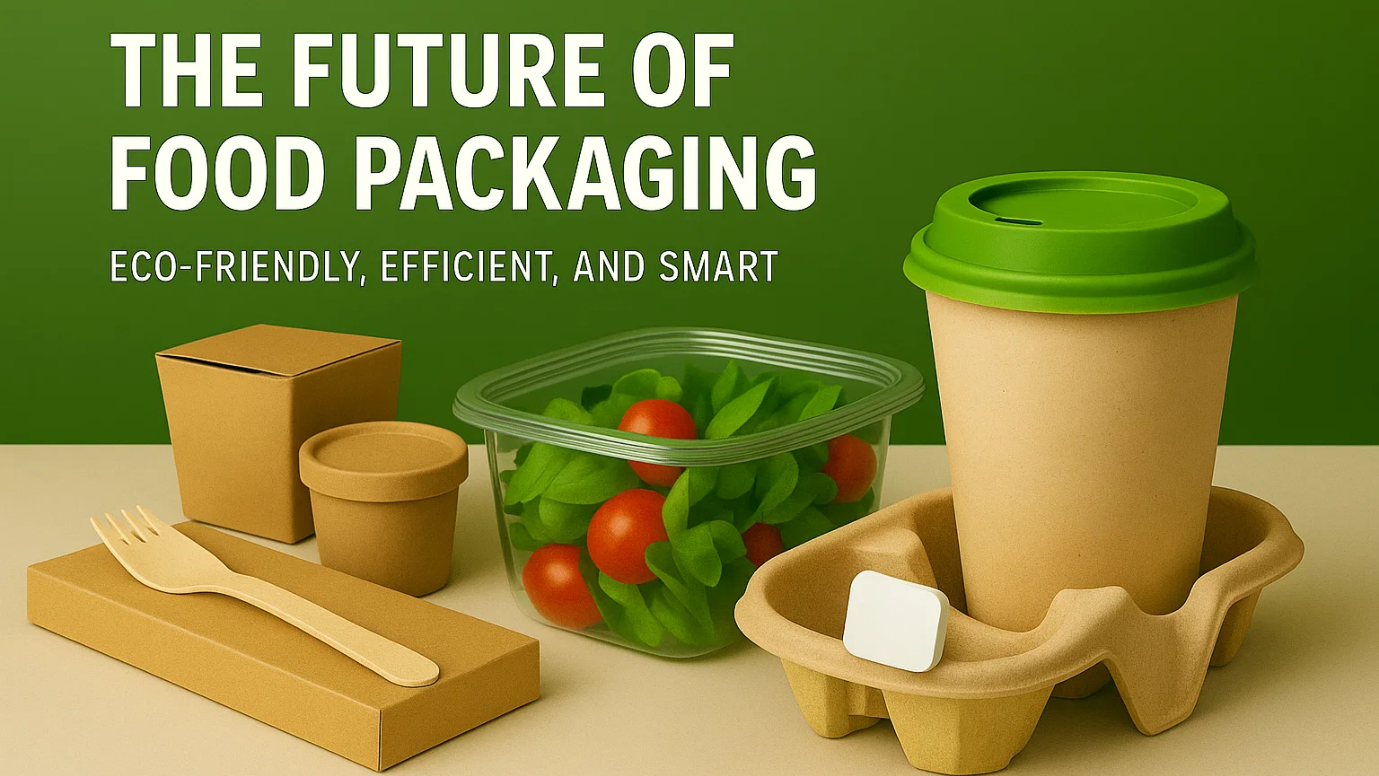
Takeaways, cafes, and food stalls are increasingly using plant-based materials, like bagasse, palm leaf, or pressed wood. For instance, bagasse is a fibrous material which made from sugarcane waste. This environmentally friendly food packaging alternative is sturdy and fully compostable. The clamshell bagasse boxes can be used as a replacement for polystyrene foam boxes to safely handle hot and greasy food without leaking or losing integrity.
- Bioplastics
Bioplastics are a type of plastic, but it is made from renewable biological materials, like corn starch, sugarcane, potatoes, or vegetable oils, instead of fossil fuels, like petroleum. Polylactic Acid, or PLA, is one of the widely used bioplastics, which is both compostable and suitable for rigid and flexible packaging. These containers look and work like clear plastic, so customers can see what’s inside the box, but are commercially compostable. So, if you rely on plastic for transparent packaging, then PLA is a suitable alternative.
- Advanced Recyclable Packaging Material
Paper and cardboard packaging options are a go-to material to replace plastic packaging, but more improvements have been made to improve their strength, moisture resistance, and food safety. Now, food boxes and trays are made from recycled cardboard or kraft paper, and they can be readily recycled again after use. Food packaging made from natural kraft board is lightweight and grease-resistant, so it can be used for packing burgers, sandwiches, pastries, and fast-food takeaway.
- Edible Packaging
Now, another innovation shaping the future of sustainable food packaging is edible packaging. It is developed using materials like seaweed, rice starch, or milk protein (casein), which are not only biodegradable but also safe to consume.
- Smart Packaging
Packaging boxes and trays are now more than containers. These are being integrated with embedded sensors that monitor, track, or communicate information about the food’s condition. For instance, time-temperature indicators. These are small labels or sensors that change colour based on the temperature history of the product. It indicates whether food has been stored safely or exposed to conditions that could compromise its freshness. Food businesses can also utilize QR codes and RFID tags in packaging for traceability. By scanning the QR code, the consumer can access detailed information about the food’s handling and nutritional value.
Why is it Time for Eco-Friendly Food Packaging?
The food industry is booming, especially with the takeaway and delivery sectors experiencing exponential growth. As convenience becomes a priority for modern consumers, 2.1 billion people worldwide used online meal delivery, and 1.5 billion used online grocery delivery. However, the rapid expansion of the use of plastic containers and other non-biodegradable materials can contribute to the ecological crisis. In this context, here’s why eco-friendly packaging could be the best shift for your business,
- Appeal to Eco-Conscious Consumers
Modern customers are increasingly attentive to the sourcing and packaging practices of the food industry. They evaluate your brands not only on price or convenience, but also on how well they align with their personal values, especially environmental responsibility.
- Reduce Regulatory Risks
The use of plastic takeaway packaging for food is not in compliance with regulatory pressure. Local governments as well as national bodies continue to introduce bans, taxes, and limitations to curb plastic packaging. Shifting to eco-friendly packaging will help steer away uncertainty and potential liability.
- Strengthen Brand Image
Modern consumers relate your packaging choices to your broader values. When you use paper or cardboard boxes for food packaging, your brand will be considered socially responsible and environmentally aware. Such positive brand perception will build stronger emotional connections with customers, promising purchase decisions and long-term loyalty.
- Tap on New Marketing Opportunities
Environmentally friendly food packaging can be used for marketing as well. For instance, paper bags can be designed with custom designs, logos, and eco-labels to communicate your commitment to quality and sustainability. Consumers often reuse the aesthetically appealing paper bags, which will be your free, mobile advertising medium.
- Contribute to the Circular Economy
Biodegradable food packaging is widely recyclable and compostable. So, when you include eco-friendly packaging, you can contribute directly to a circular economy, reducing landfill waste. In fact, in certain areas, lower waste disposal costs and tax benefits can be an additional advantage.
- Health and Safety Assurance
Traditional packaging materials, especially plastic, can leach harmful chemicals into your food, posing significant health risks. On the flip side, using biodegradable takeaway containers is non-toxic and safe for food contact. With a growing number of health-conscious customers, sustainable food packaging can boost your sales.
Wrapping Up!
Amidst the battle against food waste and plastic pollution, a new frontier is emerging through eco-friendly and smart packaging. In fact, the transition to eco-friendly packaging is no longer a choice, but has become a necessity for the food industry. It addresses pressing environmental challenges, aligns with modern customer preferences, and builds a positive image for your brand.
Are you ready to adopt greener, cleaner, and more sustainable packaging alternatives? At Food Packaging Direct, we have a lot of varieties when it comes to biodegradable food packaging options. Order your products now and set your sustainable brand image among your customers.