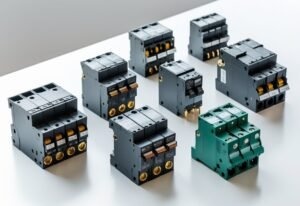
Miniature circuit breakers (MCBs) are essential for modern electrical systems, providing crucial circuit protection and enhancing electrical safety. There are several types of MCBs, including different tripping curve types (such as Type B, C, and D) and specialized variants. Each type serves specific functions, ensuring that electrical circuits operate without the risk of overloads or short circuits.
Understanding these different MCB types is vital for selecting the right circuit protection device for various applications. Thermal MCBs trip based on temperature increases, while magnetic MCBs respond to sudden surges in current. The most MCBs combine both thermal and magnetic protection mechanisms, catering to specific needs efficiently.
By exploring the diverse types of miniature circuit breakers, readers can gain insight into how these devices work and their importance in maintaining electrical safety. Knowing the right MCB type not only protects valuable appliances but also helps in preventing potential hazards in any electrical setup.
Fundamentals of Miniature Circuit Breakers
Miniature circuit breakers (MCBs) are essential safety devices in electrical protection systems. These tools automatically disconnect circuits during overload or short circuit conditions, preventing damage to circuits and equipment. Understanding their function, design, and components is vital for effective use.
What Is a Miniature Circuit Breaker?
A miniature circuit breaker is an electromechanical device that provides automatic protection to electrical circuits. MCBs are installed in distribution boards and are designed to interrupt current flow under fault conditions. Unlike traditional fuses, which must be replaced after tripping, MCBs can be easily reset. Their compact design allows for installation in various systems while ensuring robust performance.
MCBs operate through two main principles: thermal and magnetic tripping. The thermal trip mechanism typically utilizes a bimetallic strip that bends under heat from overload currents. In contrast, the magnetic trip operates via an electromagnetic coil that trips instantly during short circuit situations. This combination provides a quick and effective response to electrical faults.
MCB Working Principle
The working principle of a miniature circuit breaker is based on its ability to detect abnormal current flow. When excessive current flows through the circuit, the MCB’s trip unit activates. This occurs through either thermal or magnetic mechanisms.
- Thermal Tripping: In this method, the bimetallic strip heats up and bends due to the excess current. Once it bends past a certain point, it triggers the trip mechanism to open the circuit.
- Magnetic Tripping: In instances of short circuits, the magnetic coil generates a strong magnetic field, immediately actuating the trip mechanism. This action interrupts the flow of electricity almost instantaneously.
MCBs are designed to handle both overload and short circuit faults, ensuring comprehensive protection for circuits.
Main Components and Internal Structure
The internal structure of an MCB consists of several key components that work together to provide its functions:
- Trip Unit: The heart of the MCB, responsible for sensing current and initiating a trip. It contains both thermal and magnetic trip mechanisms.
- Bimetallic Strip: A crucial element in the thermal trip method that reacts to heat generated by overload currents.
- Electromagnetic Coil: This component is critical for the magnetic trip function, triggering an instant response during a fault.
- Arc Chamber & Arc Chutes: When the circuit opens, an arc may form. The arc chamber and arc chutes help manage and extinguish this arc safely to protect other components.
- DIN Rail Holder: MCBs are typically mounted on a DIN rail, which allows for easy installation and maintenance in electrical panels.
These components work in unison to ensure that MCBs operate effectively under various electrical conditions, safeguarding the overall electrical system.
Key Types of Miniature Circuit Breakers by Tripping Curve
Miniature circuit breakers (MCBs) come in various types, each designed with specific tripping characteristics to handle different electrical loads effectively. Understanding these types helps in selecting the right MCB for optimal performance and protection.
Type B MCB
Type B MCBs trip when the current reaches 3 to 5 times the rated current. They are commonly chosen for residential applications where devices do not have high inrush currents. These circuit breakers offer reliable overload protection and are effective for general household loads, including lighting and outlets.
Key Features:
- Tripping Characteristics: Trips at 3-5 times rated current.
- Application: Ideal for household circuits and lighting.
- Nuisance Tripping: Less likely, unless heavy machinery is used that may generate brief overcurrent peaks.
- Fault Current: Provides adequate protection against expected fault currents in standard residential settings.
Type C MCB
Type C MCBs trip at 5 to 10 times the rated current. This makes them suitable for commercial and industrial applications where motors or devices have medium starting currents. Type C MCBs can handle more significant inrush currents without tripping, making them optimal for equipment like transformers and fluorescent lighting.
Key Features:
- Tripping Characteristics: Trips at 5-10 times rated current.
- Application: Best for commercial environments, including workshops and small factories.
- Thermal and Magnetic Tripping: Features both thermal and magnetic tripping components for effective protection.
- Frequent Tripping: Less prone to nuisance trips compared to Type B, but can still trip with unusual starting loads.
Type D MCB
Type D MCBs trip when the current exceeds 10 to 20 times the rated current, making them suitable for applications involving heavy machinery and large motors. These circuit breakers are designed to handle high inrush currents that occur during device startup. They provide robust short circuit protection, ensuring safety in environments like manufacturing and large commercial settings.
Key Features:
- Tripping Characteristics: Trips at 10-20 times rated current.
- Application: Ideal for heavy-duty equipment, such as motors and large inductive loads.
- Magnetic Tripping: Primarily relies on magnetic tripping for quick disconnection.
- Fault Current: Ensures reliable operation during potential short circuit events without nuisance tripping.
Specialized MCB Types and Extended Trip Curves
Miniature Circuit Breakers (MCBs) offer various specialized types designed for specific applications and protection needs. Understanding these types can help in selecting the right MCB for different electrical systems.
Type A MCB
Type A MCBs are highly sensitive and intended for circuits with low inrush currents, such as those used for semiconductor devices. They trip when the current reaches 2 to 3 times the rated current, providing quick protection against short circuits. This feature makes them essential for protecting sensitive electronics that might be damaged by sudden spikes in current. The rapid tripping characteristic is beneficial in preventing circuit damage and ensuring system reliability.
Applications include lighting and other electrical devices that require immediate overload and short circuit protection. Since Type A MCBs offer such sensitive protection, they can minimize downtime by quickly disconnecting power when a fault occurs.
Type K MCB
Type K MCBs are designed for circuits with high inrush currents, such as motors and transformers. They trip at 8 to 12 times the rated current, allowing them to handle short overloads common during motor startup. This makes Type K MCBs ideal for applications where equipment needs extra tolerance for initial current peaks.
These MCBs combine thermal and magnetic trip mechanisms, safeguarding against both overload conditions and short circuits. They are frequently used in industrial settings where motor-driven equipment is prevalent. The selection of this type ensures durability while maintaining necessary protection.
Type Z MCB
Type Z MCBs provide very high sensitivity, tripping between 2 to 3 times the rated current. This specialization is critical for protecting sensitive devices, such as semiconductor components. Their fast response is essential in environments where even minor current spikes can lead to damage.
Type Z MCBs are often employed in applications requiring precise control and protection, such as computer systems and medical equipment. By utilizing such MCBs, users can ensure the reliability of delicate electronics while avoiding unnecessary downtime or damage.
Other Variants: Type G and Type H
Type G and Type H MCBs serve niche applications beyond the common A, B, C, and D types.
- Type G MCBs trip between 3 to 5 times the rated current, making them suitable for general applications but with more tolerance than Type A. They are often found in residential applications where moderate protection is needed.
- Type H MCBs are designed for specific inductive loads, tripping at 5 to 10 times the rated current. This makes them useful in applications where devices experience short, frequent inrush currents.
Both types involve magnetic trip mechanisms to ensure swift protection against short circuits and overloads, adding complexity to the overall circuit safety strategy.
By understanding these specialized types and trip curves, electrical professionals can make informed choices about circuit protection tailored to the specific demands of their applications.
Pole Configurations and Application Areas
Miniature Circuit Breakers (MCBs) come in various pole configurations to cater to different electrical protection needs. Each configuration serves specific applications in electrical systems and enhances safety by preventing overloads and short circuits.
Single-Pole MCB
Single-pole MCBs are designed to protect one phase of a circuit. They are typically used in residential settings where appliances draw single-phase power, operating at a voltage rating of up to 230V. These breakers are essential for smaller circuits, like lighting and outlets, providing efficient overload protection.
When a fault occurs, the single-pole MCB trips, cutting off power to the circuit while allowing others to continue functioning. This helps maintain safety in homes by preventing electrical hazards from affecting the entire system. They are easy to install and reset, making them a practical choice for everyday usage.
Double-Pole MCB
Double-pole MCBs protect both the live and neutral wires in a single-phase circuit. They are commonly used for appliances that require more power, such as water heaters and air conditioners. With a voltage rating of 230V, these breakers provide essential safety features in higher load applications.
By isolating the entire circuit when tripped, double-pole MCBs ensure effective protection for appliances and prevent potential damage from electrical faults. They are often found in distribution boards and are vital in maintaining electrical safety in both residential and commercial settings.
Triple-Pole and Four-Pole MCBs
Triple-pole MCBs manage three-phase systems, while four-pole MCBs include a neutral connection. These breakers are essential in commercial and industrial applications where machines operate on three-phase power. Their voltage ratings typically reach up to 400V.
Triple-pole MCBs offer protection for each phase, while four-pole MCBs protect all three phases and the neutral, ensuring comprehensive safety. Both configurations are used in larger electrical setups, such as distribution boards, to ensure system reliability and protect against overloads and faults across multiple phases.
MCB Ratings, Standards, and Selection Factors
Understanding MCB ratings, breaking capacities, and relevant standards is essential for selecting the right Miniature Circuit Breaker (MCB) for a specific application. This section covers important factors and guidelines that help in effective MCB selection.
Breaking Capacity and Voltage Ratings
Breaking capacity refers to the maximum fault current an MCB can safely interrupt without being damaged. This is essential for ensuring protection in case of an overload or short circuit. Common breaking capacities for MCBs are 6 kA and 10 kA, which indicate their ability to manage fault currents up to that level.
The voltage rating designates the maximum voltage the MCB can handle. Common voltage ratings for MCBs include 230V for single-phase circuits and 400V for three-phase circuits. Choosing an MCB with the correct breaking capacity and voltage rating ensures effective protection of electrical circuits and minimizes risk.
Standards: IEC 60898-1 and IEC 60947-2
Two significant standards govern the performance and safety features of MCBs. IEC 60898-1 outlines requirements for MCBs used in household and similar applications. The standard includes specifications on rated current, breaking capacity, and temperature performance, ensuring safe and reliable operation in residential settings.
IEC 60947-2 addresses circuit breakers used in industrial environments. It covers aspects like service conditions and operational characteristics. Understanding these standards ensures that the selected MCB meets the necessary safety and performance criteria for its intended use.
How to Choose the Right MCB
Selecting the appropriate MCB involves several key factors. First, assess the circuit’s load requirements to determine the necessary rated current. For residential applications, Type B MCBs are ideal, as they trip between 3 to 5 times the rated current.
Next, consider the breaking capacity suitable for the environment. For industrial settings, a higher capacity, such as 10 kA, may be necessary to effectively handle potential fault currents. Additionally, evaluate regional compliance requirements, often aligned with IEC standards like 60898-1 for home use or 60947-2 for industrial applications.
Taking these steps ensures the right MCB is chosen for optimal circuit protection and safety.
Advancements and Future Trends in Miniature Circuit Breakers
Recent developments in miniature circuit breaker (MCBs) emphasize smarter technologies and enhanced safety. These advancements are reshaping how electrical systems operate, making them more efficient and reliable.
Smart MCBs and IoT Integration
The development of smart technologies is a key focus for MCB advancements. Smart MCBs now integrate with the Internet of Things (IoT), enabling better control and monitoring of electrical systems. These devices can communicate data to smartphones or central systems, allowing users to track energy usage and detect faults in real time.
- Remote Monitoring: Users can monitor circuit status remotely, receiving alerts for issues like overloads.
- Data Analytics: By analyzing usage patterns, systems can optimize energy efficiency and inform users about potential problems before they develop into major faults.
This technology also enhances installation by allowing settings to be adjusted via mobile applications, reducing the need for physical access.
Enhanced Safety Features and New Technologies
Safety is a top priority within electrical protection systems. Innovations in MCBs now include advanced trip mechanisms that improve response times during short circuits and overloads.
- Thermal and Magnetic Protection: New designs enhance traditional thermal and magnetic protection, offering quicker trip responses.
- Dual Tripping Mechanisms: Some MCBs now feature dual mechanisms, combining thermal and electronic trips to ensure reliability during varying load conditions.
Additionally, newer materials enhance durability and heat resistance. These features minimize fire risks and equipment damage, crucial for modern electrical safety. Incorporating these advancements ensures that MCBs will continue to protect users effectively in a fast-evolving electrical landscape.