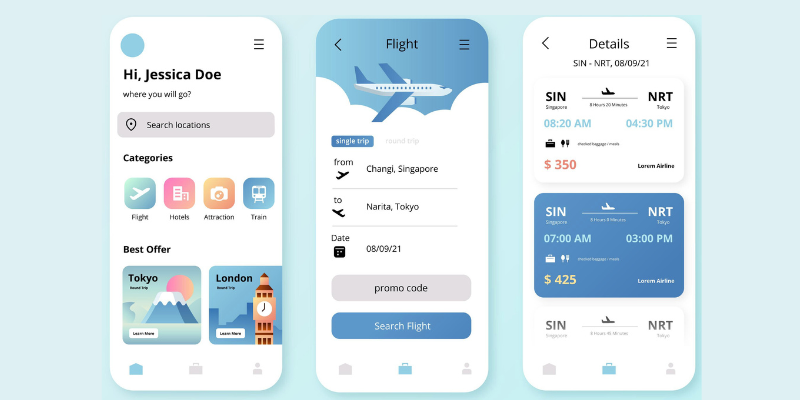
The travel industry is a perpetual motion machine, constantly reinventing itself, and at its heart lies technology. For travel apps, 2025 promises to be a year of accelerated innovation, driven by evolving traveler expectations and the maturing of disruptive technologies.
Developers and businesses alike must understand these shifts to remain competitive and deliver the next generation of seamless, personalized, and impactful travel experiences.
The era of static booking platforms is over; the future belongs to intelligent, immersive, and highly responsive digital travel companions.
What are the Top Travel App Trends for 2025?
Here’s a deep dive into the top trends shaping travel app development in 2025:
1. Hyper-Personalization Powered by Advanced AI and Machine Learning
Personalization isn’t new, but in 2025, it’s reaching unprecedented levels of sophistication. AI and Machine Learning (ML) are the engines behind this transformation.
Travel apps will move beyond basic recommendations based on past searches to truly anticipate user needs and desires, often before the user even articulates them.
- Intelligent Itinerary Generation: AI will craft dynamic itineraries that adapt in real-time to user preferences, weather changes, local events, crowd levels, and even individual moods. Imagine an app suggesting a cozy café during a sudden downpour or re-routing your walking tour to avoid a crowded area, all based on live data and your past behavior.
- Predictive Analytics for Pricing & Deals: AI models will analyze vast datasets, including historical pricing, demand patterns, seasonality, and even social media sentiment, to predict optimal booking times for flights and hotels, offering users “buy now” or “wait” recommendations for maximum savings. Dynamic pricing within apps will also become more common, offering personalized discounts.
- Context-Aware Recommendations: Beyond just suggesting hotels, apps will recommend specific rooms based on past preferences (e.g., “You prefer quiet rooms with a city view, here are three options”). Similarly, dining suggestions will factor in dietary restrictions, preferred cuisine, and even the social context of the trip.
- AI-Powered Travel Assistants/Chatbots: Moving beyond basic FAQs, these assistants will leverage Generative AI and Natural Language Processing (NLP) to handle complex queries, manage re-bookings due to disruptions, offer real-time translation, and provide concierge-level support, making interactions feel more human and efficient.
For those looking to create a travel app in this evolving landscape, understanding these trends is not just about adopting new technologies; it’s about fundamentally reimagining the traveler’s journey.
2. Immersive Experiences with Extended Reality (XR)
Augmented Reality (AR), Virtual Reality (VR), and Mixed Reality (MR) are transcending novelty to become genuine tools for pre-trip planning and in-destination exploration.
- Virtual Previews & Tours: Before booking, travelers can “virtually” tour hotel rooms, cabins on cruise ships, or even specific seats on an airplane. VR can transport users to destinations, allowing them to explore landmarks or walk through bustling markets from the comfort of their homes, aiding decision-making.
- AR-Enhanced Navigation & Guides: In-destination, AR overlays digital information onto the real world. Pointing your phone at a historical monument could reveal its history, reviews, or even animated historical reconstructions. AR walking tours will become more interactive, guiding users with visual cues and providing contextual information about their surroundings.
- Interactive Maps & Wayfinding: A travel app development company can leverage AR to make indoor navigation at large airports or convention centers much more intuitive, guiding travelers directly to their gates, lounges, or baggage claims.
3. Sustainable and Responsible Travel Features
As environmental awareness grows, travelers are increasingly seeking eco-friendly options. Travel apps are responding by integrating features that promote sustainable choices.
- Carbon Footprint Calculators: Apps will offer tools to calculate the carbon emissions of flights, accommodations, and ground transportation, allowing users to make informed decisions and even offset their impact.
- Eco-Friendly Accommodation & Transport Filters: Dedicated filters will help users find hotels with sustainability certifications, public transport options, or bike rentals instead of relying solely on car rentals.
- Support for Local & Ethical Tourism: Features that highlight local businesses, community-based tours, and ethical animal encounters will become more prominent, allowing travelers to contribute positively to the places they visit.
- Waste Reduction Reminders: Apps might offer tips for reducing plastic use, finding water refill stations, or encouraging responsible disposal of waste while traveling.
4. Seamless Multimodal & Connected Journeys (IoT Integration)
The future of travel is about connectivity and smooth transitions across various modes of transport and services.
- Unified Itinerary Management: Apps will seamlessly integrate flights, trains, buses, ride-shares, and even micro-mobility options (like scooters) into a single, dynamic itinerary, with real-time updates and alternative suggestions in case of disruptions.
- IoT in Accommodation: Smart hotel rooms connected via apps will allow guests to control lighting, temperature, curtains, and even order room service directly from their device. Keyless entry via smartphones will become standard.
- Smart Airport Integration: Apps will connect with airport systems to provide real-time updates on security wait times, gate changes, baggage claim information, and even guide users through the airport via indoor navigation. Biometric check-ins managed through apps will also gain traction.
- Invisible Payments & Digital Wallets: Frictionless payment experiences, where transactions happen almost invisibly in the background, will become the norm. Integration with digital wallets (Google Pay, Apple Pay, UPI) and even blockchain-based payment solutions will enhance security and convenience.
5. Voice Search and Conversational Interfaces
Voice technology is maturing rapidly, offering a natural and hands-free way to interact with travel apps.
- Voice-Activated Booking: Users will be able to book flights, hotels, and activities using natural voice commands, reducing the need for typing and navigating menus.
- On-the-Go Assistance: Voice assistants within apps will provide real-time guidance for navigation, local recommendations, and instant translation, especially useful when exploring a new city.
- Multimodal Search: Combining voice commands with visual search (e.g., “Find hotels near this landmark” while pointing your phone) will create a more intuitive and comprehensive search experience.
6. Enhanced Safety & Security Features
Post-pandemic, health and safety remain a top concern for travelers. Apps will integrate advanced features to provide peace of mind.
- Real-time Alerts: Instant notifications for travel advisories, local health guidelines, weather warnings, or security threats in the destination.
- Emergency Contact & SOS Features: Quick access to emergency services, embassy contacts, and the ability to share real-time location with designated contacts during emergencies.
- Health Documentation Management: Secure storage and easy access to digital vaccination records, negative test results, or other health passes required for travel.
The initial investment, often reflected in the cost to develop a travel app, must prioritize these cutting-edge features and a seamless user experience to ensure long-term success. The market is increasingly demanding more than just a booking tool; it wants an intelligent, reliable, and delightful travel companion.
Conclusion
The travel app industry in 2025 is on the cusp of an exciting transformation. The convergence of AI, XR, IoT, and voice technology, coupled with a heightened focus on personalization and sustainability, is paving the way for truly intelligent and immersive travel experiences. Developers and businesses that embrace these trends will not only meet but exceed the expectations of modern travelers, ensuring their apps become indispensable parts of every journey, from inspiration to return. The future of travel is hyper-connected, deeply personal, and incredibly exciting.