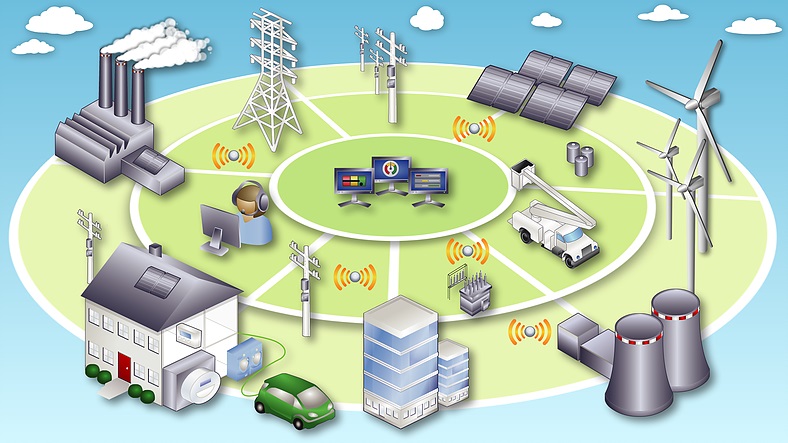
From improving outage response times to managing the complex flows of distributed energy resources (DERs), ADMS is helping utilities transition from traditional, reactive grid management to a smarter, more predictive, and data-driven approach. In an era where reliability, efficiency, and sustainability are paramount, ADMS is not just useful — it’s essential.
What Is ADMS?
ADMS stands for Advanced Distribution Management System, and it refers to an integrated platform that combines various utility applications to monitor and control the distribution of electricity in real time. At its core, ADMS brings together systems such as:
- SCADA (Supervisory Control and Data Acquisition): For real-time data gathering and control.
- DMS (Distribution Management System): For grid analysis, load forecasting, and decision-making support.
- OMS (Outage Management System): For detecting, managing, and resolving outages efficiently.
This integration allows utilities to have a comprehensive, unified view of their electrical distribution network — enabling faster decisions, better reliability, and optimized performance.
The Evolution from Traditional Systems to ADMS
In the past, utilities relied on siloed systems that handled different tasks independently — monitoring, outage detection, maintenance scheduling, etc. This fragmented approach often led to slower response times, inefficiencies, and missed opportunities to optimize power flow.
As energy systems have grown more complex — with the rise of rooftop solar, battery storage, electric vehicles, and real-time energy trading — the limitations of legacy systems became more apparent. ADMS evolved to meet these new demands, offering a centralized, intelligent solution capable of managing modern grid complexities.
Why ADMS Is a Game-Changer for Utilities
1. Real-Time Grid Visibility and Control
ADMS provides operators with a live, detailed view of the entire distribution network. This includes voltage levels, power flows, outages, and DER activity. Operators can react to issues immediately or automate responses based on predefined rules, dramatically improving reliability and response times.
2. Outage Detection and Restoration
One of the most impactful features of ADMS is its outage management capability. When a fault occurs, ADMS pinpoints the location, reroutes power to minimize the affected area, and guides field crews to restore service faster. This leads to shorter outages and higher customer satisfaction.
3. Integration of Renewable Energy
Modern grids must accommodate power flows from both central plants and decentralized sources like solar panels and wind turbines. ADMS excels at managing these bidirectional flows, balancing demand and supply in real time, and ensuring voltage stability even with variable generation.
4. Energy Efficiency and Load Management
With tools like volt/VAR optimization (VVO) and demand response integration, ADMS enables utilities to reduce energy losses, maintain voltage within optimal ranges, and manage peak demand — all without compromising service quality.
5. Predictive and Preventive Maintenance
By analyzing historical and real-time data, ADMS can identify patterns that indicate potential equipment failure or network stress. This predictive capability helps utilities perform maintenance before failures occur, saving costs and preventing outages.
How ADMS Supports a Smarter Grid
The smart grid isn’t just about automation or renewable energy — it’s about adaptability. As climate events become more severe and energy usage becomes more dynamic, utilities must be able to respond quickly and intelligently to changes. ADMS enables this adaptability by acting as the command center of the smart grid.
It also plays a crucial role in enabling customer participation. By supporting distributed energy resources and demand-side management, ADMS empowers consumers to be not just users of electricity, but active participants in the energy ecosystem.
The Role of ADMS in Grid Modernization
Around the world, governments and utilities are investing in grid modernization programs to improve reliability and transition to cleaner energy. ADMS is often a foundational element of these initiatives. Whether it’s managing microgrids, supporting net-zero targets, or enhancing cybersecurity, ADMS offers the tools needed to evolve the grid for the future.
Some key ways ADMS supports modernization include:
- DERMS Integration: Managing distributed energy resource management systems for better coordination.
- Microgrid Support: Isolating and operating sections of the grid independently during outages.
- Cybersecurity Monitoring: Providing real-time alerts and anomaly detection in control systems.
Challenges and Considerations
While the benefits of ADMS are substantial, its implementation is not without challenges:
- Cost and Complexity: Deploying ADMS requires significant investment in software, hardware, and training.
- Data Quality: The system relies on accurate, high-quality data from sensors and devices across the grid.
- Change Management: Utility staff need to adapt to new workflows and real-time decision-making tools.
However, for most utilities, the long-term benefits — including improved efficiency, customer service, and operational resilience — far outweigh the initial hurdles.
Final Thoughts
In a rapidly changing energy landscape, utilities need more than traditional tools to stay competitive, reliable, and sustainable. ADMS provides a unified, intelligent platform that transforms how electricity is managed — turning data into action and complexity into clarity.
By enabling real-time visibility, automation, and smarter decision-making, ADMS has earned its place as the brain of the modern grid. As utilities continue to navigate challenges like climate change, electrification, and decentralized energy, ADMS will be the technology that keeps the lights on — smarter, cleaner, and faster than ever before.