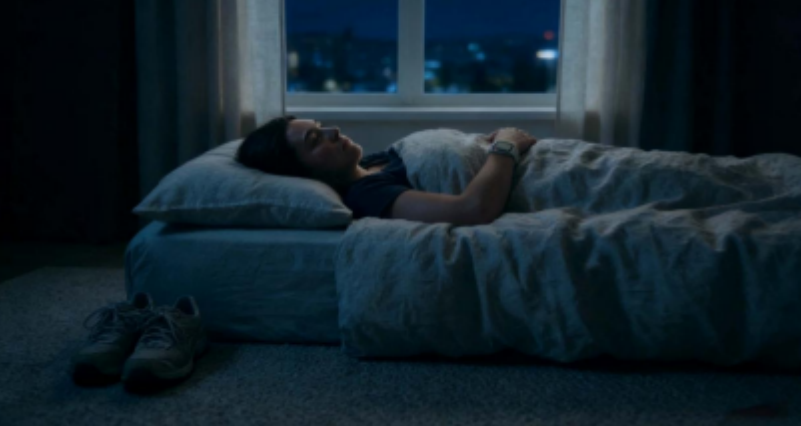
A woman lies awake in bed late at night
You hit your 10,000-step goal today. Your body feels tired. Traditional health logic says you should fall asleep within five minutes of hitting the pillow.
But strange things happen. You lie there, and your body is exhausted. Yet, your mindis racing. Your heart is beating a little too fast.
You are experiencing a physiological state called Exercise Induced Insomnia.
This sounds wrong. We usually think exercise helps sleep. But trying to hit your goal late at night is different. You accidentally activate a “biological fight mode.”
The hard truth is: Timing matters more than amount.
Muscle tiredness is good for sleep. But the metabolic energy needed for night exercise wakes you up. Studies show that moderate exercise within 90 minutes of bed delays your body’s natural cooling process. This makes it harder to fall asleep.
Why Your Body Resists Sleep After Exercise
To understand this, we must look at your hormones. We need to stop thinking “tiredness equals sleep.” We need to look at internal mechanisms like your body clock and cortisol.
- Cortisol at Night
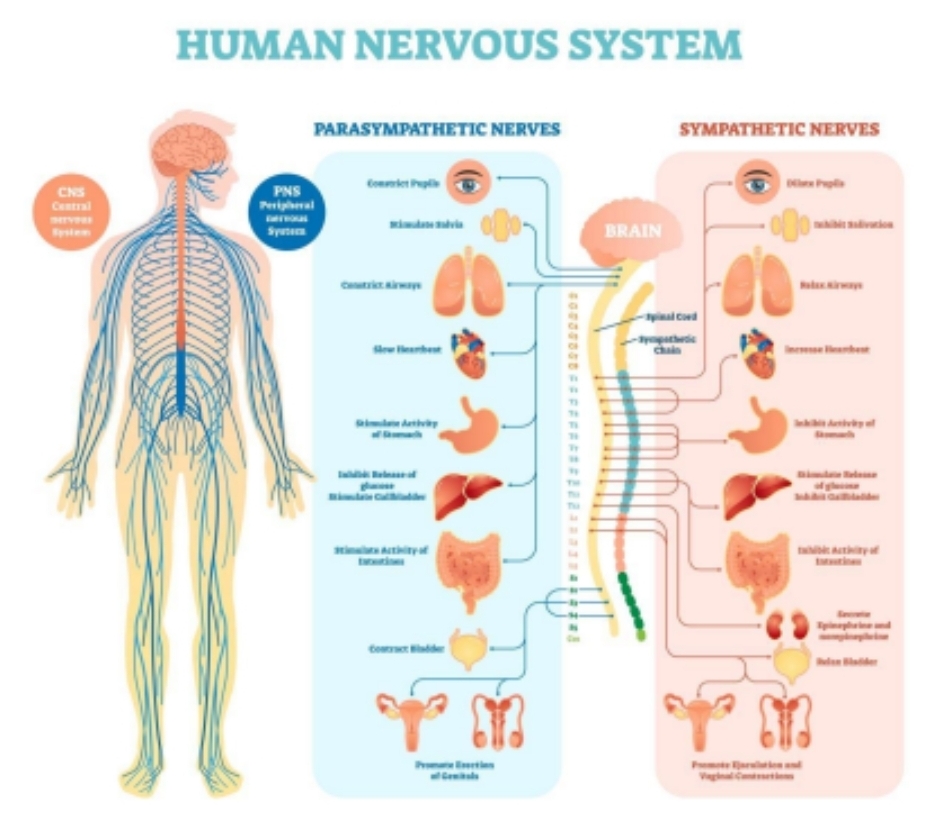
Human Nervous System
Think of cortisol as your body’s internal alarm. In the morning, it wakes you up. It makes you sharp. But walking at 8:00 PM is like keeping the alarm on. You are preventing the alarm from turning off. As neuroscientist Dr. Matthew Walker explains,”Sleep is a parasympathetic event. You cannot fall asleep while your fight-or-flight system is active.”
Even if you stop at 9:00 PM, the cortisol stays in your system. It stops you fromfalling into a deep sleep. You need to realize this. Calming the alarmis just as important as waking it up. You need a “buffer zone” to turn it off.
- Body Temperature and Cooling
Your core body temperature needs to drop about 2-3 degrees Fahrenheit to sleep. Exercise before bed does the opposite. It raises your temperature. This makes sleeping much harder. Think of your body as a car engine. You cannot drive 100 kmand expect the engine to be cold immediately. It releases heat slowly. The fix is simple. Move intense activity to earlier in the day. Give your engine time to cool down. This signals your brain to sleep.
- Physical vs. Mental Fatigue
This is the key difference in hormone-related sleep issues.
Physical fatigue: Your muscles are empty.
Mental fatigue: Your brain is tired. Late-night exercise makes your body tired. But chemicals like dopamine make your mind alert. You end up with “Tired but Wired” syndrome. Your legs are heavy, but your brain is moving fast.
Choosing Intensity and Timing
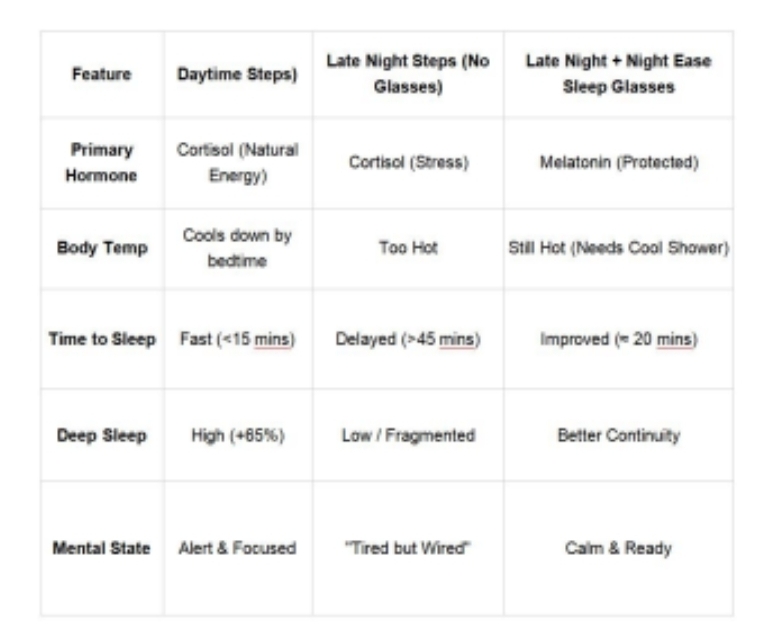
The Effects Of Exercise Timing On Sleep Quality
Let’s look at the data. A key study in the Journal of Sports Sciences analyzed sleeppatterns. It found a big difference based on timing. (Even if you are not an Olympian, your biology is the same).
Morning/Afternoon Group: People exercising at 7:00 AM or 1:00 PMsawgreat results. Their Deep Sleep increased by 65%. Their cortisol dropped naturally in theevening.
Late Night Group: People exercising after 7:00 PM had high stress signals. Their melatonin (sleep hormone) was delayed.
Research on daily movement (NEAT) proves a point. Low-intensity movement duringthe day is better than one high-intensity session at night.”Replacing 30 minutes of sitting with evening exercise increased wakefulness after falling asleep.”This proves that while the calories burned are the same, the “cost” to your sleep is very different.
How to Fix Your Sleep and Exercise Relationship
If you want both exercise and sleep, you need to make simple adjustments. 1. Cancel post-dinner exercise.
If you haven’t hit your goal by dinner, accept the loss today. Even if it is just 1,000steps. This aligns your body with its natural cortisol curve. The health benefit of those steps is much smaller than the benefit of good sleep. Therefore, set a clear boundary. Use your lunch break to get steps. Stop the habit of exercising after dinner.
- Change your night routine.
If you want a healthy habit, switch to stretching. It still burns some calories. But it relieves tension from the day. It does not raise your body temperature or heart ratelike walking. Walking wakes you up. Stretching calms you down. It activates your “rest and digest” system, not your “fight or flight” system.
- Hack your light environment.
Sometimes, late movement is unavoidable. You might need to walk the dog or finishurgent chores in a brightly lit kitchen. The challenge here is a double blowto sleep: physical activity raises cortisol, while artificial light suppresses melatonin. If youmust move at night, you need an optical shield. Wearing red-lens sleep glasses, blocks thestimulating blue wavelengths from screens and LEDs. This tricks your brainintothinking it is dark outside, protecting your crucial sleep hormones even while your
body is temporarily active.
- Lower your body temperature.
Did you do heavy work late in the day? Force a cool down. Take a hot bath or shower 90 minutes before bed. This sounds wrong, but it is science. Hot water opens your blood vessels. It brings blood to your skin surface. When you step out into cool air,
heat leaves your body fast. Your core temperature drops quickly. This temperaturechange is a strong “sleep signal” to your brain.
Conclusion
Hitting 10,000 steps is a good goal, but don’t sacrifice your rest for it. Exerciseinsomnia is just a warning that your schedule is out of sync. Tonight, try startingan8:00 PM “movement curfew.” If your step count is low today, simply accept it. Prioritize your sleep and create a calm space to wind down.