

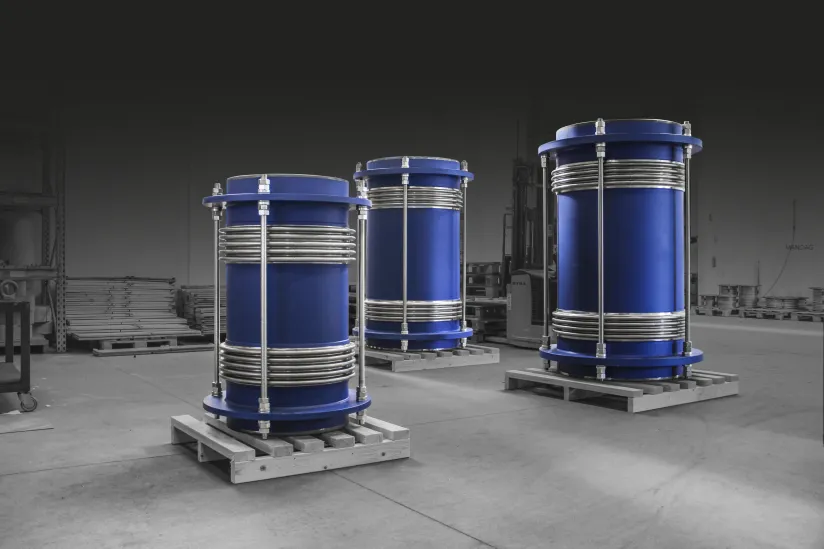
Expansion joints are flexible connectors that compensate for movement. They can be found in power stations, chemical plants, hospitals, ships and even in everyday buildings. By allowing controlled movement, they protect rigid parts from damage and keep systems running safely. But not all expansion joints are the same. Engineers select different types depending on the job.
The most common are metallic expansion joints. Built from stainless steel or other alloys, they can withstand high pressure and temperature. These are the joints you are likely to find in pipelines that carry hot steam, oil or gas. Their corrugated shape, often referred to as bellows, absorbs movement while remaining completely sealed.
Another category is rubber expansion joints. These are highly flexible and are often used where vibration is a bigger problem than temperature. For example, they are common in water treatment facilities or HVAC systems in large buildings. The elastic material dampens noise and isolates vibration, making them ideal for quieter environments.
Fabric expansion joints provide yet another solution. Made from layers of heat-resistant fabric, they are widely used in ducts that carry air or gases at lower pressures. They are particularly useful in power plants or exhaust systems, where large movements and misalignments need to be absorbed but without the need for heavy-duty metal.
There are also more specialised versions, such as slip joints and hinged joints. Slip joints allow straight axial movement along a pipe, while hinged joints guide movement in a specific direction. These designs are used when engineers need precise control over how forces are distributed in a system.
The choice of expansion joint depends on three key factors: the temperature of the medium being carried, the amount of movement expected, and the type of stress the system needs to handle. Stainless steel offers durability at high heat, rubber brings flexibility and noise reduction, and fabric delivers lightness and adaptability.
Though rarely noticed by the public, expansion joints are essential for modern life. They make it possible to generate power, transport resources, heat buildings and even keep bridges safe to drive on. Behind the scenes, these quiet connectors carry the burden of constant movement, ensuring that the systems we rely on every day remain strong, stable and reliable.